

Evergreen Trees for Small Gardens
Small gardens deserve trees too, and evergreens are the perfect choice for adding shape, form, and year-round greenery. They bring life and structure to your garden every season, keeping it full and vibrant even when other plants lose their leaves. Whether you want a neat architectural shape, soft foliage texture, or a splash of winter greenery, there are compact evergreen trees that fit beautifully even in the tightest spaces.
Top Evergreen Tree Species for Small Gardens
In our opinion, a truly perfect evergreen for a small garden meets all of the following:
- Maximum Mature Size: Height ≤5 m AND Spread ≤3 m.
- Growth Rate: Slow (typically ≤15 cm per year) to ensure low maintenance.
- Habit: Naturally Compact or Columnar Shape, requiring minimal maintenance pruning.
With the above prerequisites in mind, here are some of the best options to consider:
Conifers
Conifers bring structure, texture, and year-round greenery with little maintenance.
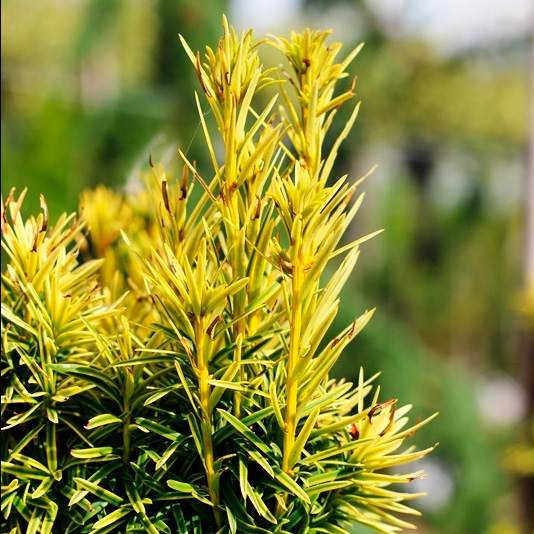
Taxus baccata ‘Fastigiata Aureomarginata’
Its sculptured narrow form makes it an ideal choice for a small garden where evergreen interest is lacking in the winter. As Taxus baccata Fastigiata Aurea remains relatively small, it can be positioned near buildings without causing harm to either party.
- Evergreen conifer, columnar form with golden-edged needles.
- Size: 3-4 m tall, 1 m wide (slow-growing).
- Excellent choice for small gardens. Slim, architectural, and exceptionally slow-growing – perfect for structure or focal points.
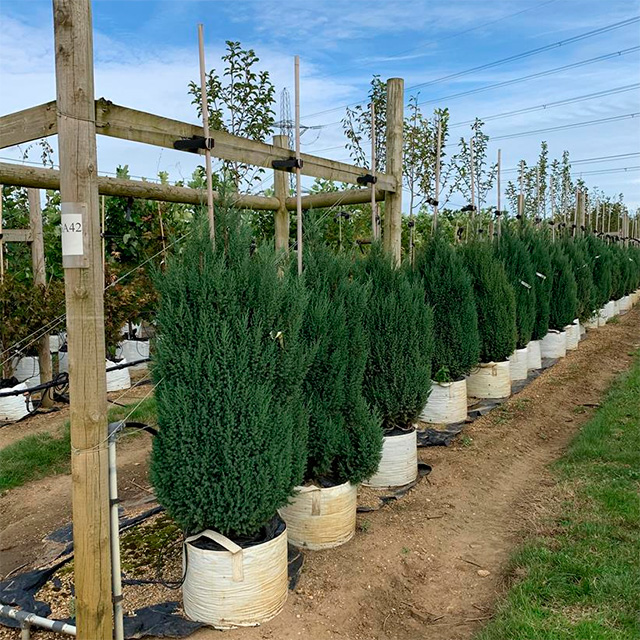
Juniperus chinensis ‘Stricta’
Generally reaching a mature height of well under 3 meters, this tree makes it an excellent choice for smaller gardens or landscape designs where space is a consideration.
Its naturally upright growth habit can add height without taking up too much horizontal space.
- Evergreen conifer, naturally narrow and upright.
- Size: 2–3 m tall, 1 m wide.
- Excellent choice for small gardens. Very tidy, slow-growing, and requires minimal maintenance – great for borders or narrow spaces.
Broadleaf Evergreens
Broadleaf evergreens are characterised by glossy, shapely foliage, often with flowers, fragrance, or berries.
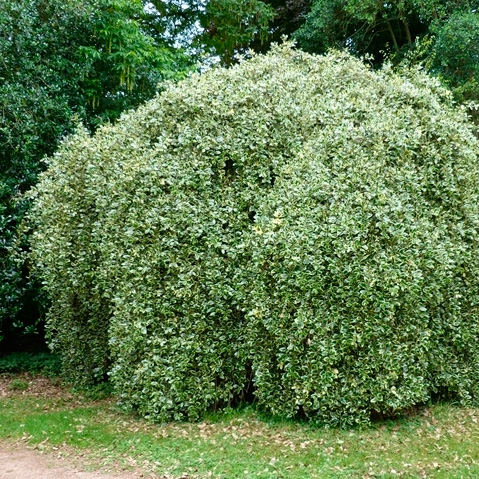
Ilex aquifolium ‘Argentea Marginata’ (Silver-edged Holly)
This stunning variegated holly is a standout for small plots. Its striking dark green leaves feature creamy-white margins, adding a “glow” to shaded corners. While hollies can grow large over many decades, this variety is very slow-growing and tolerates heavy pruning, making it easy to maintain at a compact size.
- Broadleaf evergreen, variegated foliage with bright red winter berries.
- Size: 3–5 m tall (easily maintained smaller with pruning), 2–3 m wide.
- Perfect for small gardens. Highly adaptable, provides excellent winter interest, and is one of the best species for structural clipping or topiary.
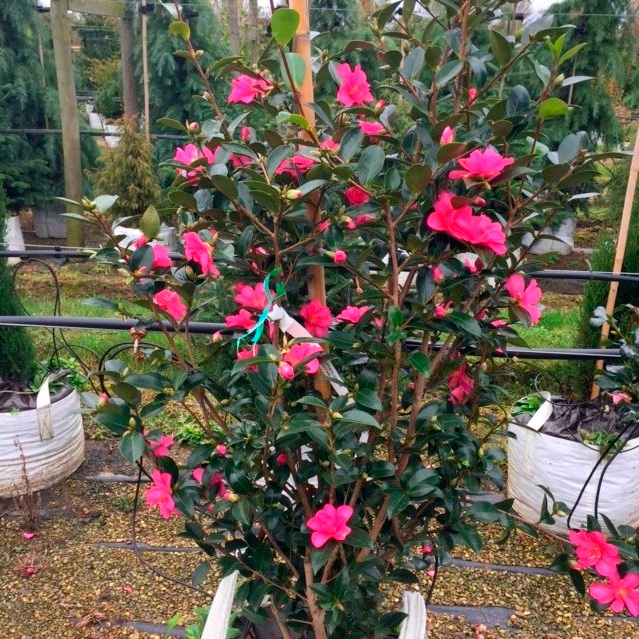
Camellia sasanqua ‘Cleopatra’ (or ‘Yuletide’)
Camellia sasanqua is a small-growing evergreen tree introduced from China in the early 1800s. Like many evergreens, it prefers well-drained soil and slightly acidic conditions.
- Evergreen shrub/tree, blooms autumn – winter with red or pink flowers.
- Size: 2–3 m tall, 1.5 – 2 m wide.
- Perfect for small gardens. Compact, elegant, and brings colour when little else flowers.
- While technically fast-growing, its value for winter colour often outweighs the pruning needed.
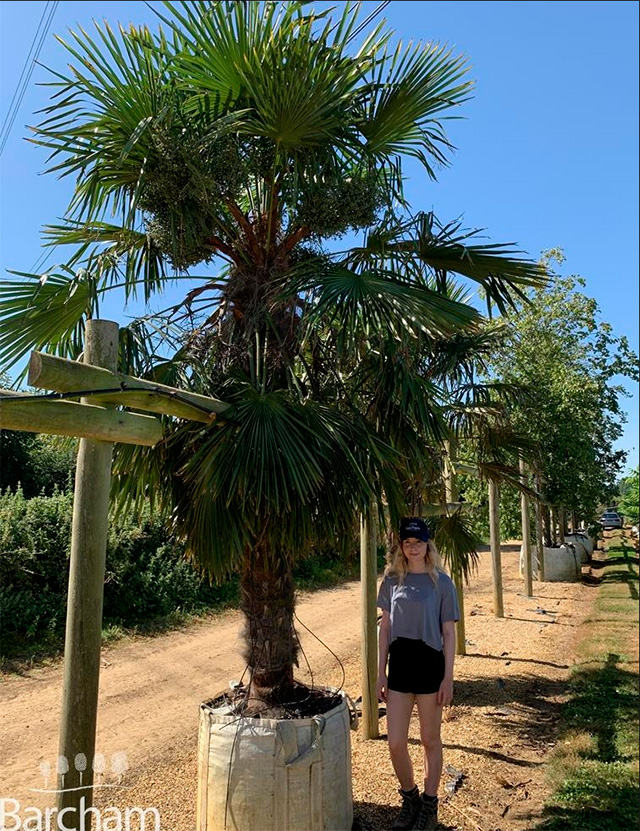
Trachycarpus fortunei (Chusan Palm)
Trachycarpus fortunei (Chusan Palm) is a hardy evergreen palm that brings a bold, tropical look to small gardens without taking up much space. Native to Central China, Burma, and India, it’s the hardiest palm grown in the UK and performs well even in cooler climates. Its fan-shaped, deep green leaves grow from a slender trunk that rarely exceeds 30 cm in diameter, making it ideal for compact plots or courtyards
- Evergreen palm with fan-shaped leaves and a fibrous trunk.
- Size: 6–10 m tall, narrow crown (~2 – 3 m spread).
- Good choice for small urban gardens – it’s tall but slim, so it doesn’t take much ground space. Great vertical accent.
Key Considerations When Choosing a Small Evergreen Tree
Before choosing, it’s essential to consider the plant’s mature size, growth pattern, and the conditions it requires to thrive.
Understanding Mature Size and Growth Rate
Even small evergreens grow over time. Check the plant’s mature dimensions – height and spread – to avoid crowding. Slow-growing species often stay manageable longer.
Shape affects both appearance and placement, which makes it yet another factor to consider.
Columnar trees work well as accents or screens, pyramidal forms make great focal points, and globes fit beautifully into borders.
Sun, Soil, and Watering Needs
Most evergreens prefer full sun and well-drained soil, but some appreciate more moisture and partial shade. Matching species to site conditions helps ensure long-term success.
Hardiness Zones and Climate Suitability
Choose varieties suited to your region’s climate. Cold-hardy options like Chusan Palm thrive across the UK, while others may prefer milder or coastal areas.
Root System Concerns
Dwarf and columnar evergreens tend to have root systems that are less aggressive than their full-sized counterparts, but clearance is still essential.
Why Evergreens Are Ideal for Small Gardens
Year-Round Structure and Colour
Unlike deciduous trees, evergreens keep your garden lively through winter. Their foliage adds structure and consistency when everything else fades.
Low Maintenance Benefits
Once established, many evergreens require minimal pruning and watering, which is a big plus for busy gardeners. All the evergreens listed above – except Camellia sasanqua – are low-maintenance trees. For more easy-care options, see our guide to the best low-maintenance trees for UK gardens.
Privacy and Screening Solutions
Even dwarf evergreens can help define space, soften boundaries, or provide a touch of seclusion without taking over. For narrow or small gardens, the best solution is often a pleached or stilted evergreen, which provides high-level screening above a fence line while taking up minimal ground space. Highly suited for this purpose are trees that tolerate tight clipping, such as Ligustrum japonicum (Japanese Privet), a utilitarian species with dense, glossy foliage that forms an effective, easily maintained screen. For a more ornamental option, consider Photinia fraseri ‘Red Robin’ pleached. Its distinctive emerging bright red leaves provide spring and autumn colour, making it a beautiful and functional choice for an immediate, dense, year-round screen.
Designing with Small Evergreens
In a small garden, every plant needs to earn its place – serving more than one purpose and contributing to the overall composition. That’s where evergreen trees, particularly dwarf and columnar varieties, truly shine. They bring year-round structure, texture, and colour – all while taking up very little space.
Structural and Focal Point Roles
Evergreens act as the permanent backbone of a small garden, keeping it visually grounded when deciduous plants lose their leaves. A well-placed evergreen can draw the eye upward, adding height and vertical interest without encroaching on limited ground space – a simple trick that helps make a garden feel larger than it really is. For height and architectural presence, Taxus baccata ‘Fastigiata Aureomarginata,’ Juniperus chinensis ‘Stricta’ or Cupressus sempervirens work beautifully as upright focal points.
Textural and Colour Roles
Beyond structure, evergreens bring variety in texture and tone, preventing the garden from feeling flat or monotonous. A small evergreen tree positioned to catch the light or cast subtle shadows can add depth and dimension, giving even a compact garden a more layered, dynamic look.
For introducing diverse texture, colour, and seasonal interest, consider these excellent small evergreen choices:
- Camellia sasanqua ‘Cleopatra’ (or ‘Yuletide’): Adds a splash of pink or red colour in the colder months when most other plants are dormant.
- Arbutus unedo (Strawberry Tree): Offers unique foliage, reddish-brown flaking bark, and late-season fruit.
- Ilex aquifolium (Holly): Provides dense structure and is often tightly clipped to show off its winter berries.
- Cryptomeria japonica ‘Elegans’: Features soft, feathery texture and turns a striking winter bronze colour.
- Trachycarpus fortunei (Chusan Palm): Brings a bold texture and a tropical feel while still being hardy enough for UK gardens.
Planting and Care Guide
At Barcham, we’ve put together a range of detailed guides covering every stage of tree care – from planting and pruning to watering and long-term maintenance. Rather than repeating that advice here, we recommend checking out the following resources to help you plant and care for your evergreen trees correctly:
- Tree Planting Guide – step-by-step instructions to give your tree the best start.
- How and When to Prune Trees – learn how to maintain shape and encourage healthy growth.
- Guides on Tree Watering – find out how to keep your trees hydrated through the seasons.
FAQs About Small Evergreen Trees
How close to a fence can I plant a dwarf evergreen?
Leave at least 1 metre of space between the tree and any wall or fence to allow for airflow and healthy root growth. Maintaining this gap is also vital for maintenance; species like Ligustrum (Privet) or Photinia benefit from annual pruning, and you’ll need enough room to access the back of the tree to keep it tidy and prevent it from pressing against the boundary.
Which small evergreen has the least leaf drop to clean up?
Broadleaf evergreens like Boxwood or Japanese holly are great if you’d rather skip general foliage cleanup altogether.
Can I grow an evergreen tree indoors?
While true evergreens need outdoor conditions, you can grow certain small conifers in pots and bring them indoors temporarily for display during holidays. It is essential to note that these trees must be kept outside long-term, as they will not thrive indoors and require outdoor temperatures to maintain health.
Still unsure which evergreen best suits your space? Our team at Barcham is always happy to help you choose the right tree for your garden size and conditions.