

Best Trees for Creating Shade
Trees are one of the most effective ways to bring natural shade into a garden. They can cool a seating area, soften strong summer sun, create shelter, and make an outdoor space feel more comfortable during the hottest months of the year.
However, not all shade is the same. A tree with a light, open canopy can filter the sun while still allowing enough brightness for lawns, borders, and underplanting. A denser tree can create stronger shade for seating, privacy, or cooling a hot part of the garden, but it may also make it harder for grass and sun-loving plants to thrive beneath it.
That is why choosing a shade tree is not simply about finding the largest canopy. The best tree for shade is the one that creates the right kind of shade for the way you want to use your garden.
Trees for Light Shade
Light shade is ideal when you want a tree to soften the sun without blocking it completely. This type of shade works well in gardens where you still want grass, borders, or other planting to receive a good amount of light throughout the day.
Trees that create light shade often have small leaves, fine leaflets, or a more open canopy. They are especially useful where you want the benefits of a tree without making the garden feel enclosed.
The following trees are good examples for creating light shade:

Gleditsia triacanthos ‘Skyline’
Gleditsia triacanthos ‘Skyline’ is well-suited to light shade because of its soft, feathery foliage, which allows sunlight to filter through the canopy rather than blocking it completely. As it matures, it forms a loose, irregular crown, making it a good choice where a larger garden needs shade without creating a dark, enclosed space.

Betula pendula
Betula pendula creates light shade through its small, plentiful leaves and graceful, semi-weeping crown. Its canopy filters sunlight rather than blocking it heavily, making it suitable where a larger garden needs height, movement, and a softer level of shade.

Alnus glutinosa ‘Imperialis’
Alnus glutinosa ‘Imperialis’ has finely cut, delicate foliage that gives the canopy a light, fluffy appearance. Its leaves allow sunlight to filter through more easily than broader-leaved trees, making it a good choice for creating soft, light shade.
Trees for Dappled Shade
Dappled shade is one of the most attractive types of garden shade. Rather than blocking the sun entirely, the canopy filters the light, creating a soft pattern of brightness and shadow that changes throughout the day.
This type of shade is ideal for relaxed seating areas, woodland-style planting, and gardens where you want the atmosphere to feel cool but not gloomy. Many shade-tolerant perennials and shrubs will also perform well beneath trees that create dappled shade, especially if the soil is improved with mulch or organic matter.

Betula utilis jacquemontii
Betula utilis jacquemontii creates dappled shade through its delicate leaves and broadly pyramidal crown. Its ascending branches give the canopy a tidy, open structure, allowing filtered light to reach the space beneath.

Amelanchier lamarckii
Amelanchier lamarckii is a small tree with a naturally light, multi-stemmed habit, making it well suited to dappled shade in garden settings. Its modest size and open crown allow filtered light beneath, rather than creating a dense, heavy shadow.

Malus toringo ‘Brouwers Beauty’
Malus toringo ‘Brouwers Beauty’ has a wide, open-branching habit that allows light to filter through the canopy. This makes it a good choice for dappled shade where you want the space beneath to remain bright and garden-friendly.
Trees for Moderate Shade
Moderate shade is useful when you want a more noticeable break from direct sun. It is well-suited to patios, benches, terraces, and parts of the garden that become too hot or exposed during summer.
Trees in this group usually have fuller canopies than those used for light or dappled shade. They can still feel garden-friendly, but the planting beneath them needs to be chosen more carefully. Lawns may grow well while the tree is young, but could struggle as the canopy becomes larger and denser over time.
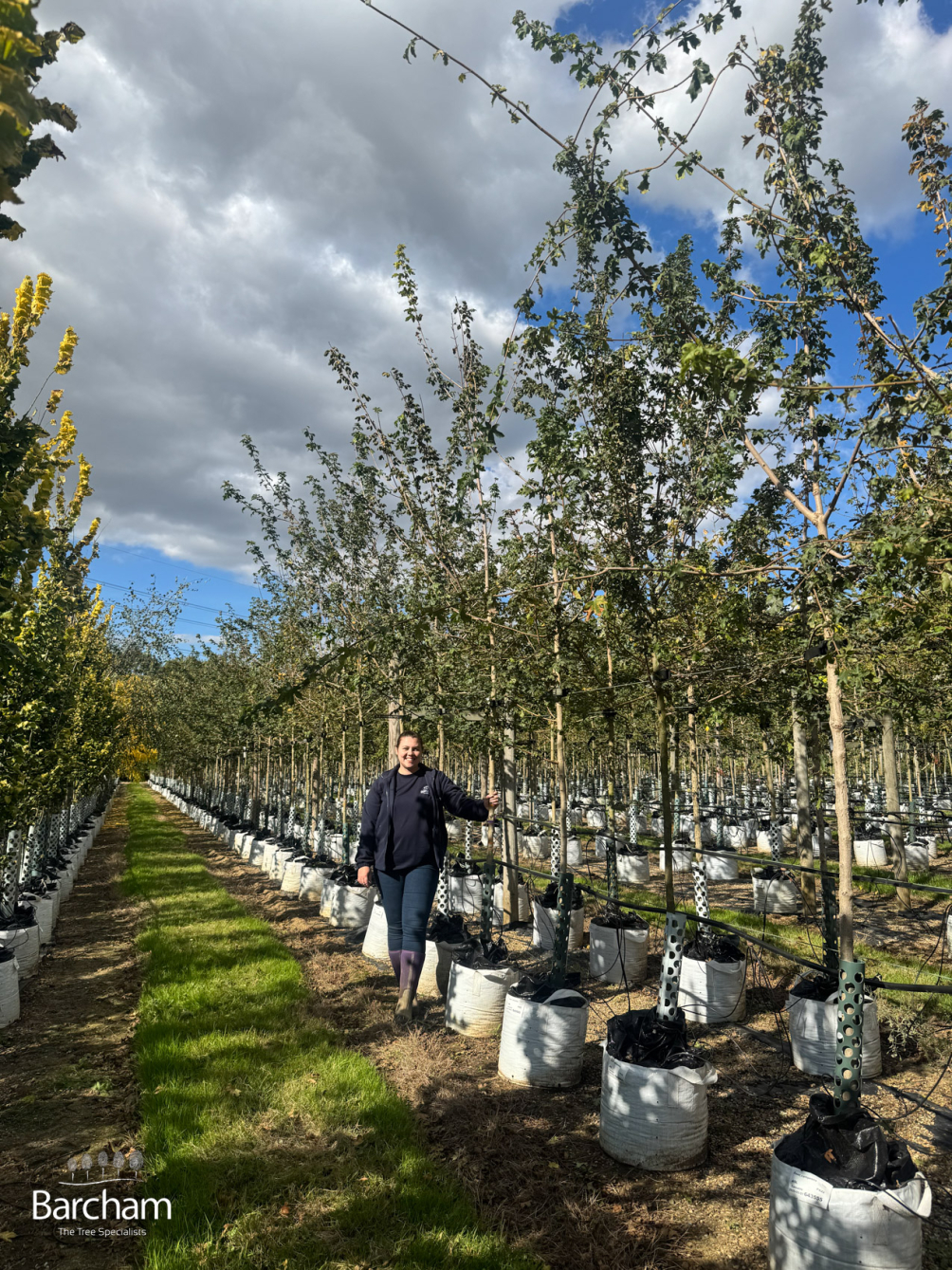
Acer campestre
Acer campestre forms a rounded crown that provides a more noticeable level of shade than lighter, finer-leaved trees. As a small to medium-sized tree that can tolerate pruning, it is a useful choice where moderate garden shade is needed without overwhelming the space.

Pyrus calleryana Chanticleer
Pyrus calleryana Chanticleer provides moderate shade through its dense seasonal foliage, which appears early in spring and remains late into autumn. Its crown is columnar and pyramidal when young, gradually broadening with age to create a more useful shaded area.

Prunus avium Plena
Prunus avium Plena forms a balanced, conical crown that provides useful moderate shade without feeling too dense or enclosed. It is a good option where a garden needs a more noticeable canopy while still retaining an open, elegant shape.
Trees for Heavy Shade
Heavy shade is created by trees with large leaves, dense canopies, or a broad spreading habit. These trees are very useful when the main aim is to create a cool area, screen a view, or provide shelter in a larger garden.
However, they should be chosen carefully. Dense shade can make it difficult for lawns to remain healthy beneath the canopy, especially once the tree is mature. Many flowering plants will also struggle unless they are specifically adapted to shady conditions.
For this reason, heavy shade trees are often best planted where the shaded area has a clear purpose, such as a seating space, woodland-style area, or part of the garden where grass and sun-loving flowers are not essential.
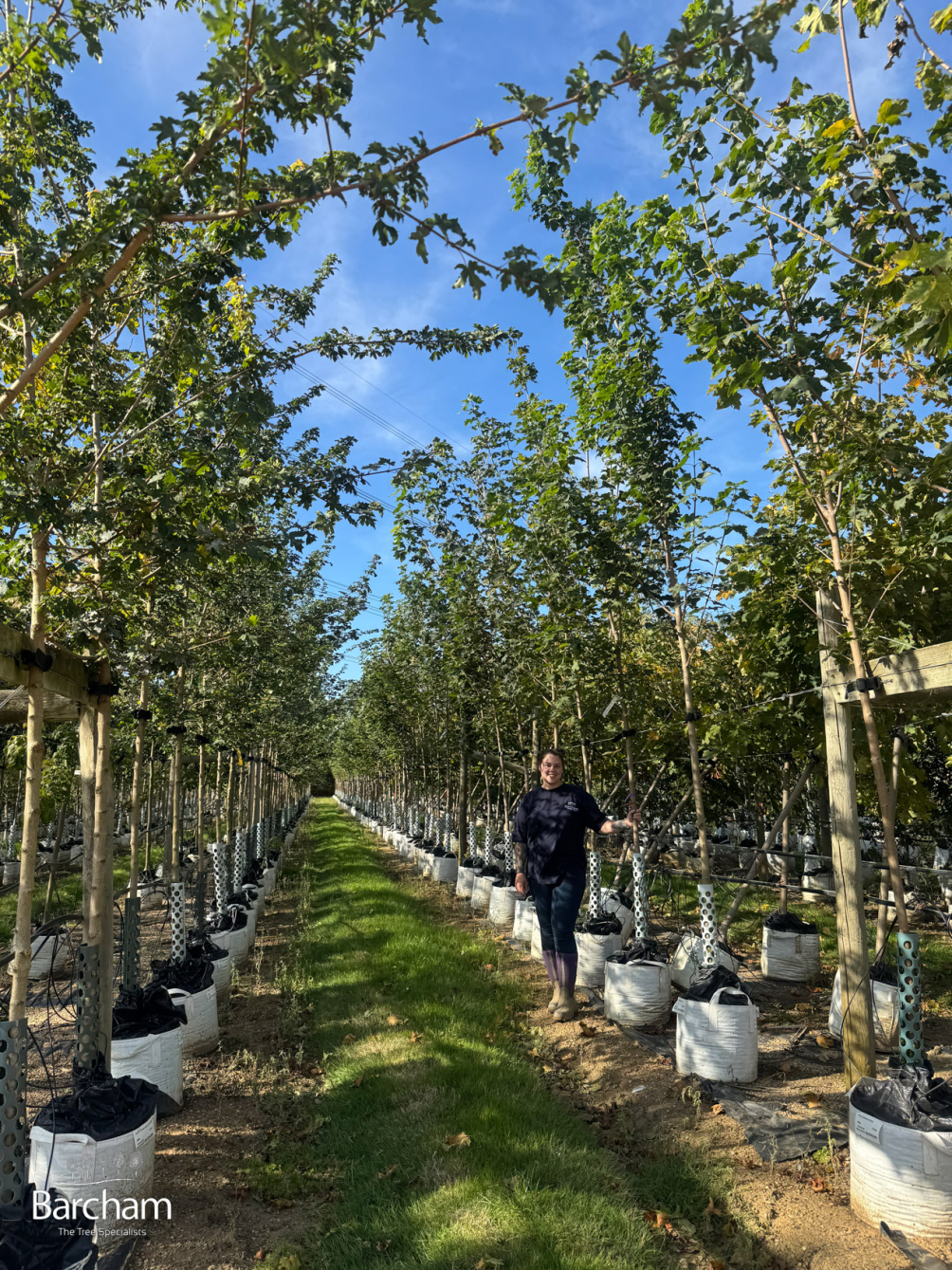
Acer platanoides
Acer platanoides creates heavy shade through its broad, spreading canopy and dense foliage. As a large tree reaching over 20m at maturity, it is best suited to parks, estates, and larger landscapes where strong shade is needed.

Tilia cordata ‘Rancho’
Tilia cordata ‘Rancho’ forms a dense, conical crown with a regular, tidy habit. Although its leaves are smaller than many other lime trees, its full canopy still creates strong shade, making it suitable for larger gardens, avenues, and parkland settings.

Catalpa bignonioides ‘Bungeii’
Catalpa bignonioides ‘Bungeii’, also known as the Dwarf Indian Bean Tree or ‘Nana’, forms a dense, perfectly rounded crown of large, lush leaves. Its compact, globose canopy creates a deep, heavy patch of shade, making it an excellent choice for providing a cool, sheltered spot in smaller gardens or restricted urban spaces.

Quercus robur
Quercus robur creates heavy shade through its expansive, imposing crown, which can spread as wide as the tree is tall. As a large tree reaching over 20m at maturity, it is best suited to parklands, large gardens, and open landscapes where there is room for the canopy to develop fully.
Choosing the Right Shade Tree for Your Garden
When selecting your tree, consider how its character will evolve over time. While a young tree might cast a soft, manageable shadow, it is important to account for its eventual height, spread, and canopy density at maturity.
If you want to maintain a lawn or vibrant underplanting, prioritise the lighter or dappled options listed above. For cooling a dedicated seating area or creating a more private retreat, moderate and heavy-shade trees may be more suitable. Always assess your garden’s soil, available space, and planting conditions to ensure your chosen tree can thrive alongside the rest of your landscape.
Explore our full range of trees to find a variety that suits your space, soil, and the type of shade you would like to create.