
Best Fruit Trees for Small Gardens
You don't need an orchard to pick your own fruit. With the right variety, a single well-placed tree can give you pears, apples, figs or mulberries year after year, even in a modest plot. The trick is choosing a tree that suits your space, soil and light.
This guide covers our recommended fruit trees, how to judge whether a tree will fit, and the basics of planting and aftercare.
Understanding Rootstocks and Fruit Tree Size
Fruit trees are available in different sizes, largely depending on their rootstock — the root system onto which a fruiting variety is grafted. Dwarfing rootstocks restrict growth for tiny courtyards or permanent pots, while semi-vigorous and vigorous rootstocks produce stronger, longer-lived trees with better resilience in heavier garden soils.
At Barcham, our fruit trees are grown on semi-vigorous to vigorous rootstocks, with unpruned mature heights of up to 7m. While they aren’t patio dwarfs, a single specimen works well as a productive focal point in a modest garden — offering blossom, fruit and wildlife value where there is room for one well-placed tree.
Pruning and training (such as growing against a sunny wall or fence) can help manage their size and shape, though it won’t change their natural vigour. When choosing a tree for a smaller garden, consider both its mature height and spread, and allow enough room for its long-term growth.
Our List of 6 Recommended Fruit Trees
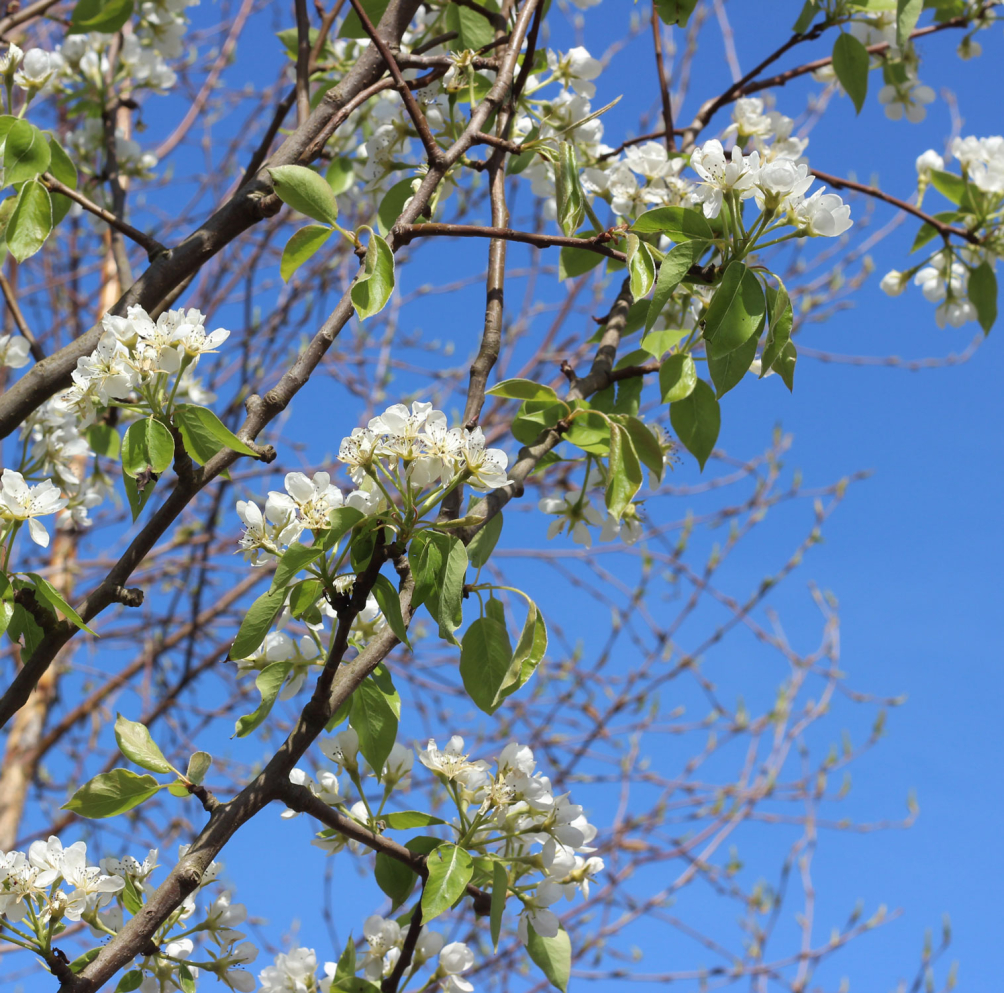
Conference Pear (Pyrus communis ‘Conference’)
- Mature height: 3–7m
- Mature spread: 4–8m
- Fruit and season: Dessert pears; fruit develops over summer and is ready to pick from October onwards
- Conditions: Copes with a variety of soils, including clay
- Pollination: Self-fertile, so a partner isn’t essential, though fruiting improves with a compatible pear nearby
- Why it suits a small garden: A hardy, adaptable variety that stays a small, oval tree and doesn’t demand a pollination partner

Doyenné du Comice Pear (Pyrus communis ‘Doyenné du Comice’)
- Mature height: 3–7m
- Mature spread: 4–8m
- Fruit and season: Dessert pears; yellowy-green fruits develop through summer and are ready to harvest in autumn
- Conditions: A sheltered courtyard or sunny position, where warmth helps bring on the fruit; tolerates most soils if well drained, but not waterlogged ground
- Pollination: Self-sterile, so it needs a pollination partner; Conference pear is a suitable choice
- Why it suits a small garden: Relatively slow-growing, which makes it easier to keep within bounds in a restricted space
View our Doyenné du Comice Pear

Black Mulberry (Morus nigra)
- Mature height: 3–7m
- Mature spread: 4–8m
- Fruit and season: Juicy black mulberries produced mid-summer, great for eating fresh off of the tree, or making jams and pies.
- Conditions: Moist, free-draining soil
- Pollination: Self-fertile. No pollination partner required.
- Why it suits a small garden: A slow-growing, productive tree that stays relatively low in height but gradually develops a wide, characterful canopy.
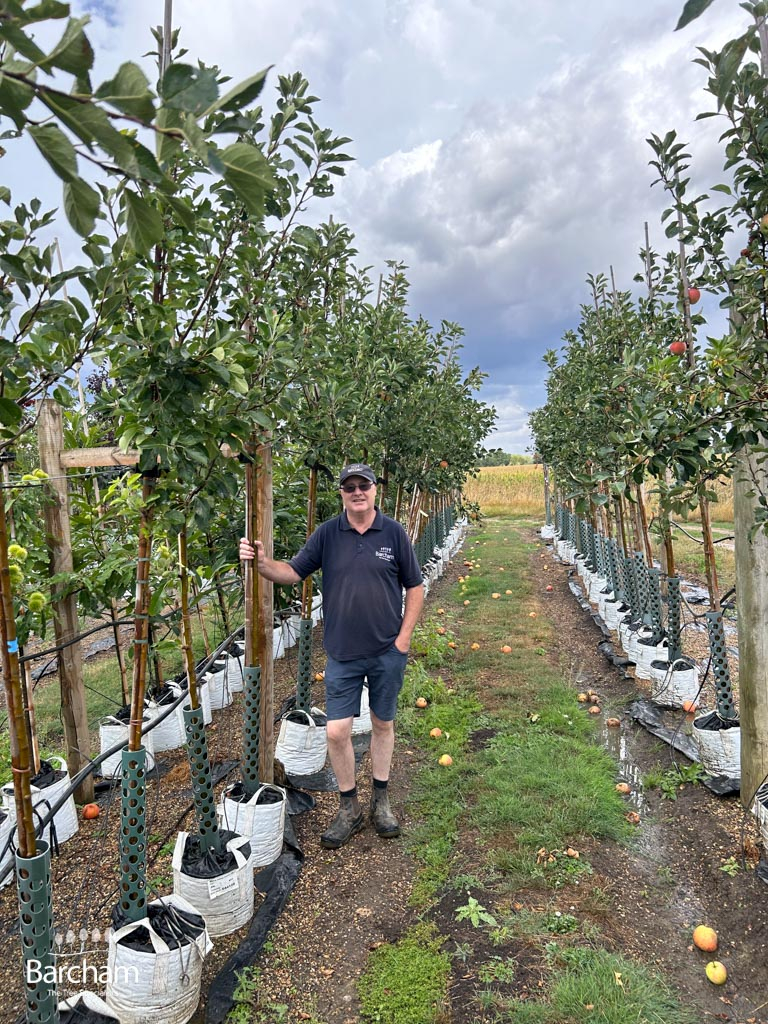
James Grieve Apple (Malus domestica ‘James Grieve’)
- Mature height: 3–7m
- Mature spread: 4–8m
- Fruit and season: Dual-purpose apples; best stewed when picked early, and can be eaten as a dessert apple into September
- Conditions: Moist, free-draining soil; less tolerant of heavy clay than other apples
- Pollination: Partially self-fertile; a second apple nearby, such as Discovery and Laxton Superb, will boost cropping though is not essential. Crab apples, such as Malus Butterball can also pollinate this tree.
- Why it suits a small garden: An early, dual-purpose apple that makes good use of a single tree
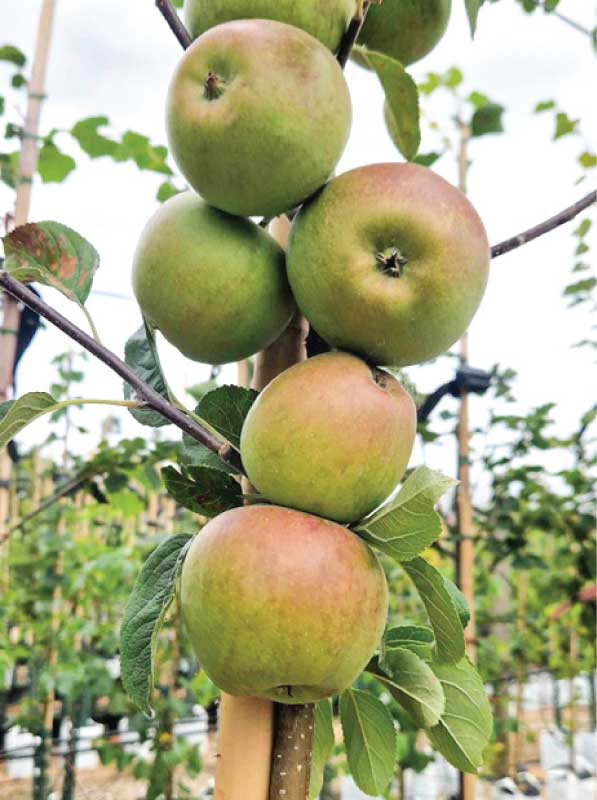
Laxton Superb Apple (Malus domestica ‘Laxton Superb’)
- Mature height: 3–7m
- Mature spread: 4–8m
- Fruit and season: Late-fruiting, sweet dessert apples, swelling to maturity by October
- Conditions: Prefers heavier soil and tolerates a degree of wetness
- Pollination: Partially self-fertile; will usually benefit from another apple variety nearby, such as James Grieve or Discovery, and can also be pollinated by crab apples such as Malus evereste.
- Why it suits a small garden: A proven garden apple with good tolerance of heavier ground
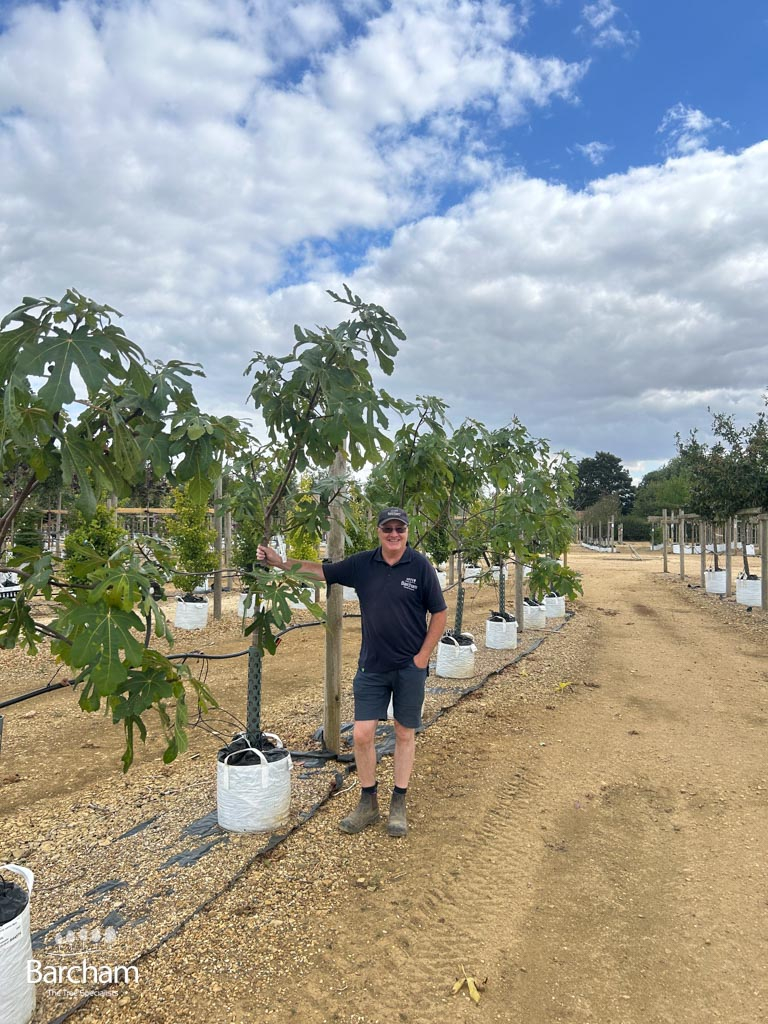
Fig (Ficus carica ‘Nero’)
- Mature height: 3–7m
- Mature spread: 3–5m
- Fruit and season: Sweet purple-brown figs; small green fruits appear by early August, then swell and ripen over the following months
- Conditions: The least hardy of the six, so choose a sheltered, south-facing position and free-draining soil; planting against a wall boosts fruiting
- Pollination: No pollination partner needed
- Why it suits a small garden: A small, rounded tree with large, lobed leaves that adds architectural shape and suits a warm wall
At a glance
| Fruit tree | Mature height | Mature spread | Sunlight | Pollination |
| Conference Pear | 3–7m | 4–8m | Full sun | Self-fertile |
| Doyenné du Comice Pear | 3–7m | 4–8m | Warm, sheltered sun | Needs a pollination partner |
| Morus nigra | 3–7m | 4-8m | Full sun | Self-fertile |
| James Grieve Apple | 3–7m | 4–8m | Full sun | Partially self-fertile |
| Laxton Superb Apple | 3–7m | 4–8m | Full sun | Benefits from a partner |
| Fig | 3–7m | 3–5m | Sheltered, south-facing | Self-fertile |
The mature height and spread of a fruit tree can vary depending on its rootstock and how it is trained and maintained. Barcham supplies established container-grown trees in several sizes. Check the specifications of your chosen variety or contact our team to make sure its eventual size suits your available space.
How to Choose a Fruit Tree for a Small Garden
Before choosing a variety, take a realistic look at your garden. These three checks will save you disappointment later.
Consider the Tree’s Mature Height and Spread
Height gets the attention, but canopy spread matters just as much. A tree that grows tall and narrow is very different from one that spreads wide, even if the two reach similar heights.
Think about where the crown will be in ten years, not where the young tree sits today. Allow room from buildings, fences, walls and neighbouring trees so branches aren’t constantly cut back or crowded. A tree given enough space is easier to prune, crops better and is less likely to cause friction with neighbours.
Check Sunlight and Soil Conditions
Most fruit trees want as much sun as you can give them. A tree may survive in a gloomy corner, but fruiting is what matters, and fruit quality and quantity depend on site conditions, not just on whether the tree stays alive.
Soil matters too. Heavy clay can be slow to drain and prone to waterlogging in winter, while very light soils dry out quickly in summer. Some varieties cope with clay better than others, and improving the planting area with organic matter helps whichever you choose. The ‘Conditions’ line for each tree above sets out its preferred sun exposure and soil, so compare it with your own garden.
Consider Pollination Requirements
Fruit trees are either self-fertile, partially self-fertile or need pollen from a different variety to set a good crop.
- Self-fertile trees can produce fruit on their own. That makes them convenient where there is only space for a single tree.
- Partially self-fertile trees can produce fruit without a pollination partner; however a better crop will be produced with one.
- Cross-pollinating (also called self-sterile) trees need a compatible variety flowering at the same time, either in your garden or close by.
If you only have room for one tree, a self-fertile variety such as Morus nigra or Conference pear is the safest choice. However, if neighbours have fruit trees nearby, you may have more flexibility than you think. Bees travel considerable distances, so a pollinating partner doesn’t always need to be in sight!
What Makes a Fruit Tree Easy to Maintain?
No fruit tree is entirely hands-off, but some are far less demanding than others. When judging how easy a tree will be to look after, consider:
- Pruning: Some trees need regular, careful pruning to crop well; others are happy with a light annual tidy. Our guide explains when to prune different fruit trees.
- Disease resistance: Varieties with good natural resilience need less intervention.
- Pollination: Self-fertile varieties don’t require a separate pollination partner, making them easier to manage in smaller gardens.
- Harvesting: A tree that stays a manageable size is much easier to pick, prune and protect.
For easy-care trees beyond fruit, with just a couple of fruit trees among them, see our guide to best low-maintenance trees for UK gardens.
To learn more about the maintenance of each tree listed, visit its product page.
Planting and Caring for Fruit Trees in Small Gardens
Correct planting and early care help fruit trees establish successfully.
- Planting: Plant at the depth the tree grew in its container, with the graft union above soil level, and allow room for its mature spread. Our guide covers how to plant container-grown trees.
- Watering: Water thoroughly after planting and regularly throughout the first two summers, paying particular attention to dry spells. See our guide on how much to water newly planted trees.
- Pruning: Timing depends on the fruit, so see our article on when and why to prune trees.
- Ongoing care: Check ties and stakes regularly and keep weeds and grass back from the base.
Frequently Asked Questions
Can You Grow Fruit Trees in Pots?
We don’t recommend growing our trees permanently in pots. They are supplied in containers so they can be planted out in the ground, where roots have room to spread and the tree needs far less ongoing watering and feeding. If you only have a patio, get in touch and we’ll advise on what may suit.
Which Fruit Trees Grow Best in Clay Soil?
Pears and many apples can cope with clay when it isn’t waterlogged. Conference pear and Laxton Superb apple are two varieties known for tolerating heavier ground. Improve drainage where you can. For more ideas, see our guide to the best trees for clay soil.
Can Fruit Trees Grow in Partial Shade?
Some will survive, but fruiting is usually weaker. Most fruit trees do best in full sun, and heavy shade tends to reduce flowering, fruit quality and ripening. If your garden is shady, choose the sunniest spot available and consider a hardy, forgiving variety.
How Far Apart Should Fruit Trees Be Planted?
It depends on the vigour of the tree and its rootstock. The more vigorous the tree, the more space it needs. As a general principle, allow enough room for the mature canopy so neighbouring trees aren’t crowding each other, and check the guidance for your chosen variety. You can plant different fruit trees close together if their space needs are met and their pollination partners suit.
Can You Plant a Fruit Tree Near a House?
Often, yes, if you choose sensibly. What matters is the mature crown size, how the roots develop and how much space you have. Keep a sensible distance from buildings, drains and boundaries, and avoid assuming one rule fits every tree and every soil. Our guide explains how far away trees can safely be planted from a house. If you’re unsure, ask us for advice before planting.
Are Fruit Trees Good for Wildlife?
Very. Blossom provides early nectar and pollen for bees and other pollinators, while fruit feeds birds and insects. Even a single fruit tree adds to the biodiversity of a small garden, and leaving a few windfalls for wildlife is a simple way to help.
Are Fruit Trees VAT Exempt?
Most fruit trees grown for edible fruit, including apple, pear and fig trees, are zero-rated for VAT in the UK. However, trees grown primarily for ornamental purposes are often subject to standard VAT rates. For more information, see the official HMRC guidance.
Choosing Your Tree
The best fruit tree for a small garden is the one that fits your space, suits your soil and gives you fruit you actually want to eat. Start with the self-fertile options if you only have room for one, and take a little time to work out where the tree will sit at maturity.
Browse our trees and select the “Fruit and Nut” filter to see our fruit trees and find the right variety for your garden, or get in touch if you’d like advice on suitability.