

How to Plant a Container-Grown Tree
Whether you are looking to enhance your garden’s beauty or contribute to a greener planet, planting a tree is one of the most rewarding projects you can undertake. At Barcham Trees, we believe that success starts with the right technique and aftercare. This guide combines our expert advice and video demonstrations to help your new tree thrive for generations.
Why Planting Trees Matters
Trees are the ultimate “natural technology” for climate action. They are the most effective solution for absorbing excess CO2 from the atmosphere and limiting global warming. In the UK alone, an estimated 50 million trees need to be planted each year to reach carbon neutrality by 2050.
By planting a tree in your garden, you are directly contributing to this vital carbon-locking effort.
Container-Grown, Bare-Root and Rootballed Trees
Different nurseries may supply trees in different forms, and the way they are planted varies slightly depending on the type.
Container-grown trees, sometimes referred to as pot-grown or potted trees, are grown and supplied in pots, with their root systems established in compost. Bare-root trees are lifted from the ground while dormant and supplied without soil around the roots, while rootballed trees are also lifted from the ground but retain a ball of soil around the roots, usually wrapped for protection.
Barcham specialises in established, container-grown trees, which can be planted throughout much of the year when conditions are suitable. For this reason, the tree planting advice and step-by-step instructions in this guide focus primarily on container-grown trees.
Choose the Right Tree for Your Space
Before you settle on a tree, ensure it matches your specific site conditions:
- Environment: Consider soil pH and soil composition (free draining/water logging), sun exposure, and wind levels.
- Space: Always check the eventual height and spread to ensure the tree won’t outgrow its location.
For ease, Barcham Trees have included a Specification Table for each tree. This table acts as a quick-reference guide to help you decide if a tree is a good fit for your garden. You can instantly check critical details such as the tree’s ultimate height (e.g., 5m+), its preferred soil type (such as well-drained or clay), its shape, and whether it is evergreen or deciduous. By checking these specs against your site, you can ensure your tree has the perfect home to thrive.
Still feeling unsure about which species is right for you? Read our guide on choosing the right trees for your garden, or reach out to our team for a personalised recommendation.
How Barcham Trees Are Supplied
Here at Barcham Trees, we specialise in supplying container-grown, instant-impact specimens. We supply our trees in an eco-friendly, efficient way. As of 2023, Barcham Trees has been peat-free. Our trees are grown in our poly-woven, white pots with compost around the roots. We cultivate our trees on the nursery to establish a healthy, fibrous root system, which ensures your tree has the best start to its new life in the landscape.
Curious about how our trees are grown or what size to expect? Read more about Barcham tree sizes and growing process to see how we deliver instant impact to your garden.
What to Do When Your Tree Arrives
When your tree arrives, it is best to get it into the ground as soon as possible. However, we understand this is not always achievable. You can keep your tree out of the ground for up to two weeks, provided you water it regularly according to the season. If you need to delay planting, store the tree in an upright position, sheltered from frost and drying winds.
When to Plant a Tree
The traditional planting season in the UK is autumn to spring (November to March), provided the ground isn’t frozen or waterlogged. However, because we specialise in container-grown trees, our trees can be planted all year round (if weather conditions are favourable).
While this gives you great flexibility, keep in mind that containerised trees planted outside of the dormant season require more dedicated aftercare to help them settle into their new home. You should also avoid planting during periods of exceptionally hot or dry weather to give your tree the best possible start. For a deeper dive into how seasonality affects establishment, see our guide on when is the best time to plant a tree.
Prepare the Area Before Planting
Preparation is key to a healthy start:
- Mark it out: Use stones, spray paint, or canes to visualise the placement.
- Clear the area: Cut grass short and remove all weeds in a 1-metre radius to reduce competition for water and nutrients.
What You Need to Plant a Tree
Gather your kit before you start:
- The tree (of course!)
- Spade and fork
- Bucket of water
- Watering can or hose
- Tree guard or spiral (to protect from wildlife)
- Mulch (such as chipped bark)
- Tree fertiliser
- Stake, mallet (or post knocker), and adjustable tree tie.
To make things easier, all of the essential planting components listed above – and more – are included in our Barcham Tree Planting Kit. Available for purchase with all of our trees, we highly recommend adding a kit to your order to ensure you have everything needed for professional-standard staking and securing. It even includes specialised fertiliser and a bag of bark mulch to give your tree the ultimate head start. If planting a multi-stem specimen, stakes are not required.
Tree Spacing and Positioning
Appropriate planning doesn’t stop at the planting pit; giving your trees the correct amount of room to breathe and grow is essential for their long-term health.
The spacing of your trees depends largely on the species, their intended purpose, and the size of the container in which they are supplied. For example, our Tree Privet (Ligustrum japonicum) can be planted at 1–1.2m centres to create an instant raised screen, or left with more space if you prefer them to grow as individual specimens. For larger maturing specimens, ensure you provide enough space for their root systems; giving a tree the room it needs to establish limits competition between plants and reduces the risk of failure.
Hedge Planting
For instant impact, our hedging plants can be planted ‘pot to pot’ (with the edges of the containers touching). Specific spacing will depend on the container size. Please contact our team for more information on our container dimensions. If you are planting specifically for privacy, check out our guide on best trees for screening for expert advice on choosing the right species to create an effective and beautiful garden barrier.
Planting Trees Near Buildings
If you are planting near a building, it is also important to consider any potential subsidence issues in the future. Given their mature height and root structure, there will be some species of trees that are not suitable for planting near to a building. You can find specific guidance in our article on how far away trees can safely be planted from a house.
How to Plant a Tree: Step-by-Step
Pit planting is the most common method for planting container-grown trees and is suitable for most soil types. It is also the method we use at Barcham for our established, container-grown trees, whose root systems remain protected within the compost until planting. Follow the tree planting steps below to give your tree the best possible start.
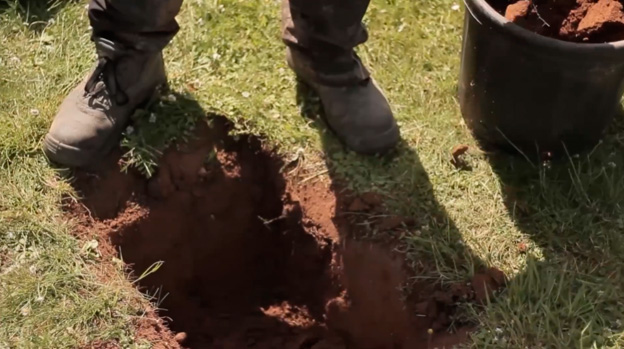
1. Dig the Hole: Use your spade and fork to dig a hole at least 25% wider than the container itself, but no deeper. Planting trees too deep runs the risk of suffocation. It is crucial to get the depth right; you can read more on why planting depth is critical for tree health.
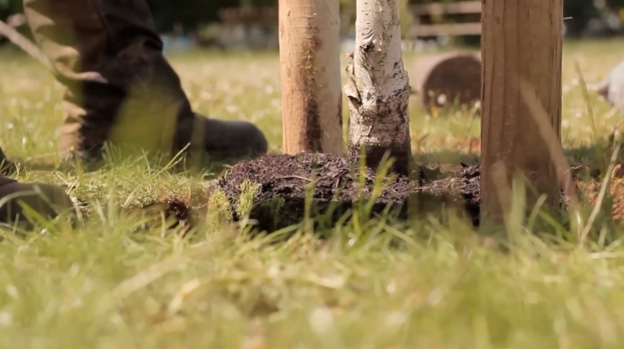
2. Check Depth: Place the tree (still in its container) into the centre of the pit to evaluate the depth. The top of the compost should be level with, or slightly above, the ground surface. If it looks good, lift the tree out and set it aside.
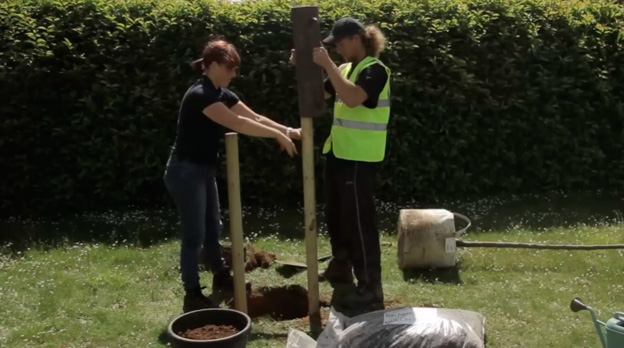
3. Staking: If using a stake, knock it into the base of the pit now, before the tree is in the way. This prevents you from accidentally driving a stake through the rootball later.
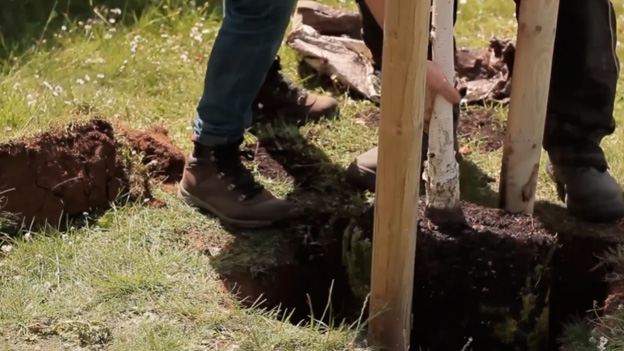
4. Prepare the Tree: Carefully remove the container and place the rootball into the centre of the hole. Never plant a tree too deep; roots need access to oxygen near the surface to thrive.
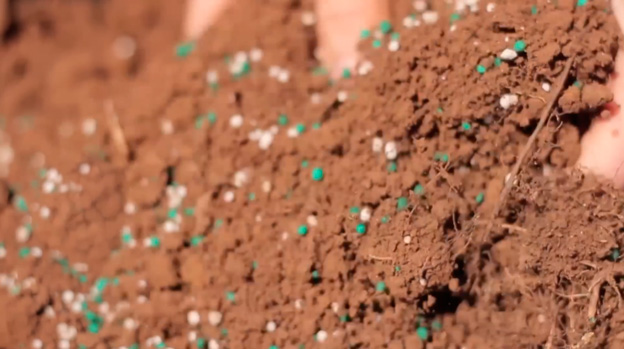
5. Prepare the Soil: The best soil to use when planting a tree is the soil you originally removed from the planting pit. To help improve establishment, consider using Barcham Long Life Tree Fertiliser. Simply mix it with the excavated soil in a bucket or wheelbarrow before backfilling.
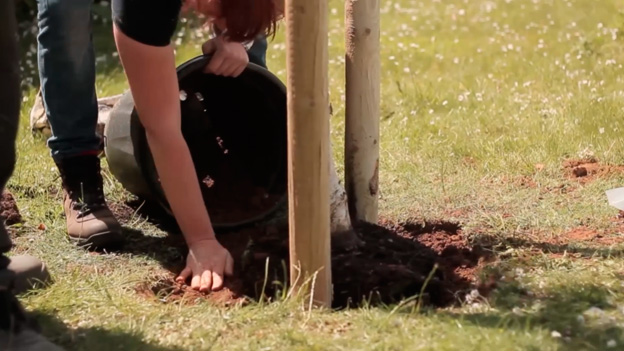
6. Backfill: Return the enriched soil to the hole, firming it gently with your heel as you go. This removes air pockets and ensures the roots are in direct contact with the soil. When using an all-purpose top soil/backfill, it is always recommended to also add the soil back that has come from the pit. This gives the tree a bit more stability in the ground that loose soil cannot.
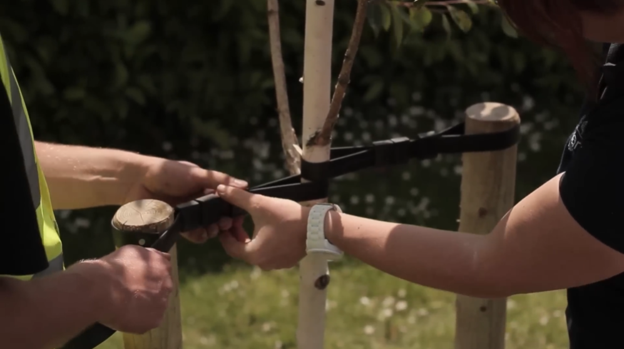
7. Secure the Tree: Apply the tree ties from each stake to the trunk. Ensure the tree is held firmly but allows for the slight natural movement that encourages trunk strength. If wildlife is a concern in your area, slide your tree guard or spiral around the trunk now to protect the young bark.
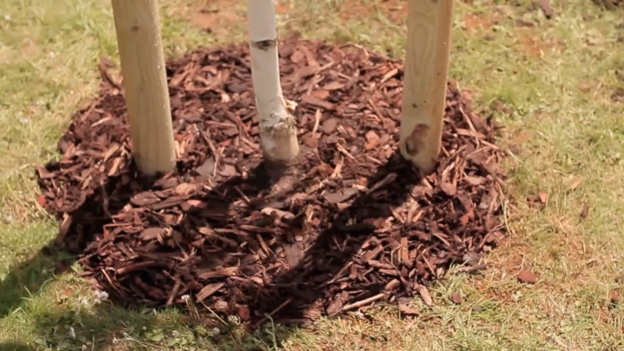
8. Mulch: Apply a 5cm layer of bark mulch around the base of the tree in a 1-metre diameter. This is vital for suppressing weeds and retaining soil moisture.
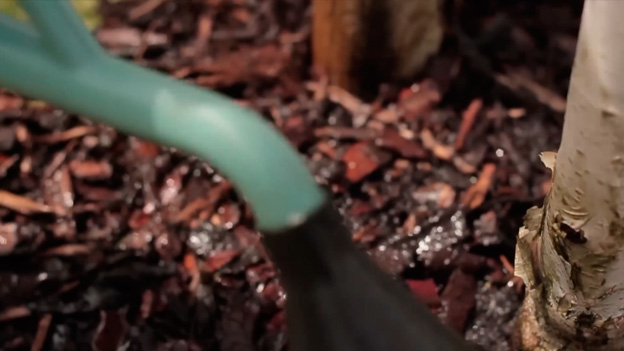
9. Water: Immediately apply two full watering cans (approximately 20 litres). This isn’t just for hydration; it helps the soil “wash” into any remaining gaps around the roots. For even better results, add Aqualatus to your water—our organic soil technology that helps maintain the perfect balance of moisture, oxygen, and nutrients in the root zone.
See a full video of the process below:
How to Care for a Newly Planted Tree
Your job isn’t finished once the tree is in the ground!
- Watering: This is the number 1 reason trees fail. Water every day with a full watering can or every other day with 2 watering cans for the first 2 summers. Trees are dormant through winter and therefore do not require watering. If your soil is very sandy or heavy clay, you may need to alter your watering schedule slightly. If you want to make watering easier and ensure a slow, steady supply of moisture during dry spells, consider using a tree hydration bag
- Weed Control: Maintain a 1-metre weed-free zone around the trunk. This helps to limit any water competition. Apply a 5cm layer of bark mulch annually to suppress weeds and retain moisture.
- Staking: Check the tree tie annually and loosen it as the trunk expands. Remove the stake after 2–3 years once the roots are established.
By following these steps, you aren’t just planting a tree; you’re establishing a legacy that will clean the air and beautify your landscape for decades to come. If you have any questions about specific species or unique soil conditions, the Barcham team is always here to help. Happy planting!