

Types of Willow Trees - 7 Stunning Varieties
Most people picture a weeping silhouette when they think of a Willow, but the genus Salix (over 400 species) offers far more: from architectural shapes to vibrant winter stems and early spring catkins. These are incredibly versatile trees renowned for their fast growth and love of moisture, allowing them to flourish in the UK climate where other trees might struggle. Willows offer year-round ornamental appeal, with the brightest stem colours appearing on new growth and their signature catkins emerging before the leaves to provide vital early nectar for pollinators. Use the mature size as your primary guide when choosing the right Willow variety for your garden.
The Defining Ornamental Feature of Willows
Each Willow (Salix) brings its own seasonal charm, but three features make them stand out in gardens and landscapes: vivid winter bark, early spring catkins, and graceful form. The brightest stem colours appear on new growth, so coppicing or pollarding every few years helps maintain their brilliance. Catkins, most famously those of the Pussy Willow (Salix caprea), emerge before the leaves, offering early nectar for pollinators. And while most willows grow quickly, their mature size should always guide where they’re planted.
Quick Reference: Featured Willow Varieties
For your convenience, here are the seven distinct types featured in this guide:
- White Willow (Salix alba and ‘Liempde’)
- Scarlet Willow (Salix alba ‘Chermesina’)
- Golden Weeping Willow (Salix alba ‘Tristis Chrysocoma’)
- Pussy Willow (Salix caprea and ‘Pendula’)
- Violet Willow (Salix daphnoides)
- Wiggerly Willow (Salix matsudana ‘Tortuosa’)
- Bay Willow (Salix pentandra)
Featured Willow Types: By Ornamental Use
From bold winter colour to graceful silhouettes, Willows offer something for every season and garden style. Below are seven standout varieties, grouped by their most striking ornamental qualities.
For Spectacular Winter Stem Colour
These Willows provide incredible colour in the depths of winter when they are dormant.
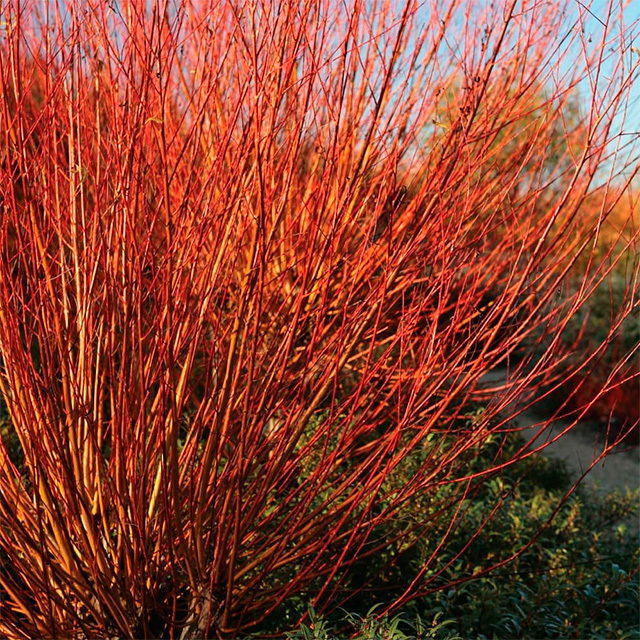
Salix alba ‘Chermesina’ (Scarlet Willow)
- Focus: Bright scarlet-red young stems in winter. Perfect for mass planting alongside yellow-stemmed dogwoods for contrast.
- Key Detail: Grows quite large but is often coppiced (cut back hard) annually or biennially to maximize new, colourful stem production.
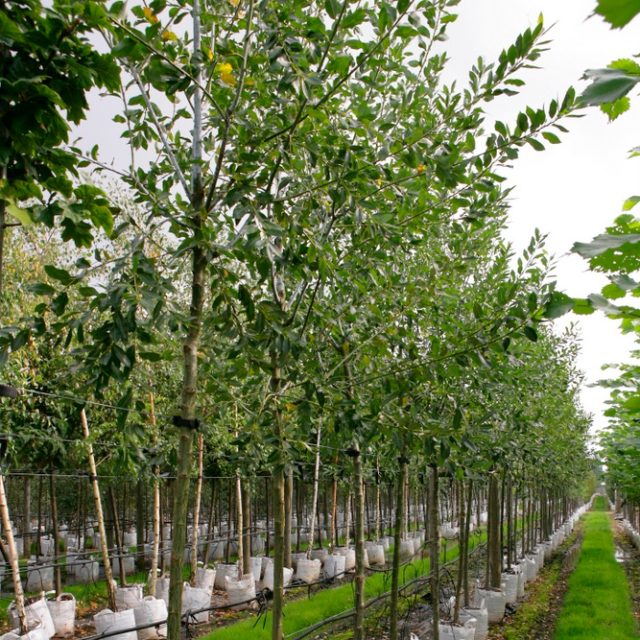
Salix daphnoides (Violet Willow)
- Focus: Violet or purple-blue young stems with a distinctive white “bloom” (waxy coating) that gives them a frosted look.
- Key Detail: Highly architectural; bark colour is most intense on new wood.
For Architectural Form and Year-Round Interest
These trees are chosen for their unique shape and structure.
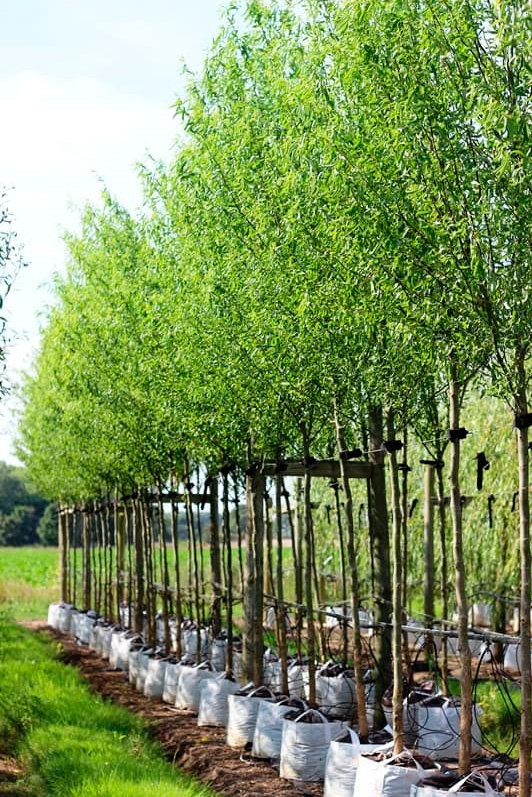
Salix matsudana ‘Tortuosa’ (Wiggerly / Dragon’s Claw)
- Focus: Twisting, contorted branches that provide dramatic, sculptural interest, especially in winter.
- Key Detail: Branches are highly sought after for cut flowers and indoor arrangements.

Salix alba ‘Tristis Chrysocoma’ (Golden Willow)
- Focus: Elegant, cascading (weeping) form combined with golden-yellow new branches that glow in the winter sun.
- Key Detail: Needs space to allow its weeping habit to be displayed fully.
For Early Spring Catkins
Chosen for their fuzzy, ornamental flower structures that signal the start of spring.
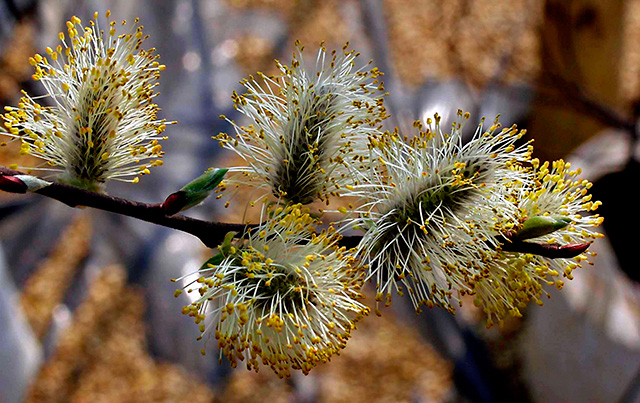
Salix caprea (Pussy Willow)
- Focus: The quintessential Pussy Willow, covered in silvery-grey catkins that swell to fuzzy yellow as the male flowers mature, providing the earliest food for bees.
- Key Detail: Available in both standard tree form and the ornamental, small weeping cultivar, Salix caprea ‘Pendula’.
For Classic Foliage and Form
Traditional willows are known for their overall tree shape and leaf features.

Salix alba (White Willow)
- Focus: The classic, native UK Willow. Grown for its speed, silvery-green leaves, and large, majestic form.
- Key Detail: The White Willow (Salix alba) is excellent for damp or boggy sites and stabilizing banks. We also offer a popular variety, Salix alba ‘Liempde’, which features upright branches that give it a narrower, more conical shape, making it suitable where lateral space is limited.
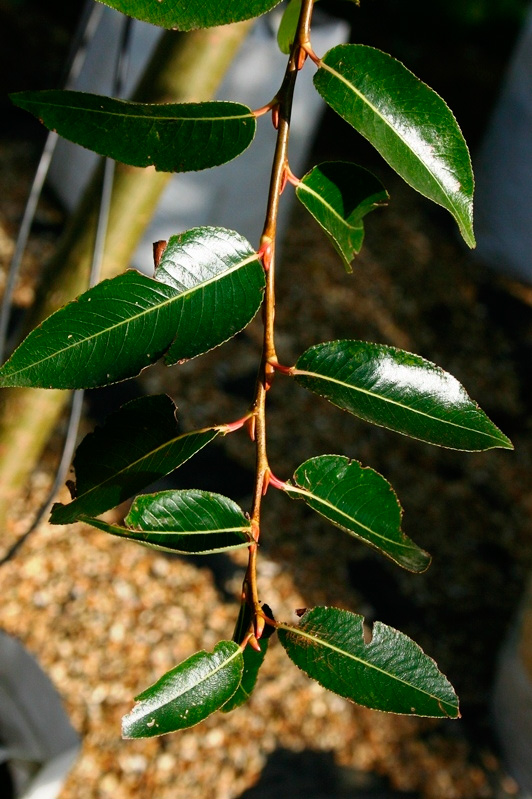
Salix pentandra (Bay Willow)
- Focus: Distinctive, glossy, dark green leaves (resembling Bay leaves), which makes it stand out from other Willows.
- Key Detail: Features later-emerging catkins in late spring/early summer.
Essential Care Tips for All Willows
Although willows are remarkably resilient and fast-growing, a few simple care practices will help them perform at their best in any setting:
- Moisture: Willows naturally thrive in moist or waterlogged ground, making them ideal for clay soils and riverbanks. Regular watering during the first growing season is crucial for establishment.
- Pruning for Colour: To keep coloured-bark varieties like ‘Chermesina’ and ‘daphnoides’ at their brightest, coppice or pollard every one to three years in late winter or early spring. Weeping or larger types only require light shaping.
- Hardiness: All Barcham Willows are fully hardy in the UK (RHS H6–H7), tolerating severe winter conditions and proving dependable for most planting schemes.
Willow Trees: The Versatile Choice
From the dazzling winter stems of the Scarlet and Violet Willows to the essential early pollen and nectar provided by the Pussy Willow, the genus Salix truly offers year-round value beyond the classic weeping form. These trees are robust, fast-growing, and thrive in conditions that many other ornamental trees avoid. If you have a damp spot, a desire for winter colour, or a need for rapid impact, the perfect Willow is waiting. Browse our full range of available Willow varieties today to find the ideal match for your garden’s size and style.