

Top 7 Trees with Yellow Flowers for UK Gardens
Trees with yellow flowers bring an immediate sense of cheer and sunshine to the UK garden, often providing valuable colour in the early or late season when little else is in bloom. However, not all yellow-flowering trees deliver the same visual impact. This carefully curated selection focuses exclusively on varieties where the blooms are genuinely showy and ornamental - large, abundant, or highly conspicuous - making them a true focal point in the landscape.
While flowers are important, they are only one factor when choosing the right tree. Before falling in love with a variety, it is essential to ensure the tree is suited to your garden’s size and growing conditions. As such, each tree is accompanied by its key specifications, allowing you to choose a variety that will not only survive, but truly thrive in your space.
Hamamelis x intermedia ‘Arnold Promise’ (Witch Hazel)

- Blossom details: One of the earliest yellow flowering trees, with spidery, fragrant yellow flowers appearing on bare wood from Mid-Winter (January-March). Flowers can last 6-8 weeks.
- Mature Height & Spread: Small tree, reaching approximately 4m in height and 3m in spread.
- Soil Type & Drainage: Prefers humus-rich, moist but well-drained soil. Tolerates acidic to neutral pH.
- Aspect/Light: Best in Full Sun or Part Shade. Needs shelter from strong winds to protect the delicate, early blooms.
- Hardiness: RHS H6 (Fully hardy across the UK).
Aesculus flava (Yellow Buckeye)
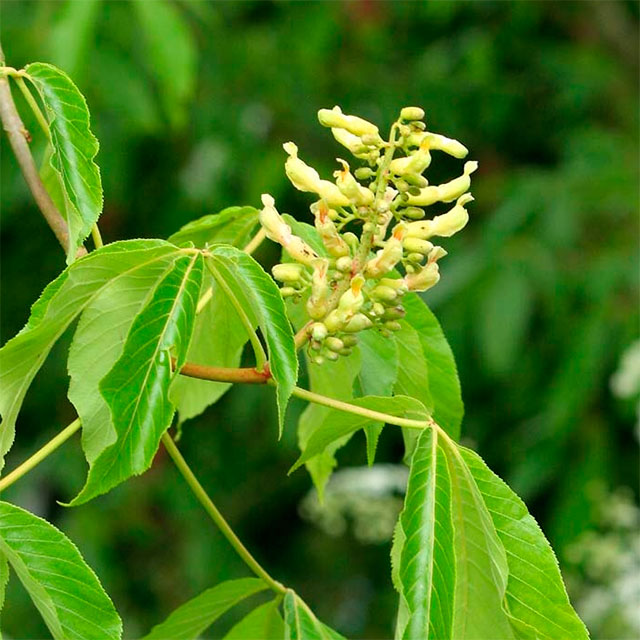
- Blossom Details: Distinctive upright clusters (panicles) of yellow flowers with orange streaks. Blooms are showy and abundant in Late Spring (May-June).
- Mature Height & Spread: A large tree, capable of reaching 20m in height and 12m in spread. Only suitable for larger gardens, parks, or avenues.
- Soil Type & Drainage: Requires deep, moist, fertile soil. Tolerates most soil types but must be well-drained.
- Aspect/Light: Adaptable, thriving in Full Sun or Part Shade.
- Hardiness: RHS H6 (Fully hardy across the UK).
Liriodendron tulipifera (Tulip Tree)
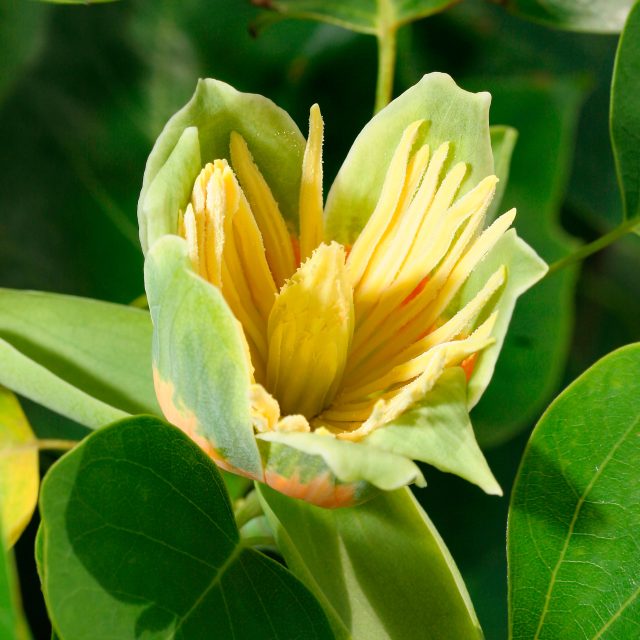
- Blossom Details: The unique flowers resemble large, upright green-yellow tulips (4-6cm long) with an orange band at the base. Flowers appear high up in the canopy in Early Summer (June-July). Note: While seedling trees take 15-20 years to flower, our established 3-4m stock should begin blooming within approximately 5-10 years of planting.
- Mature Height & Spread: A magnificent specimen tree, capable of exceeding 25m in height and 12m in spread. A choice only for very large gardens or parkland.
- Soil Type & Drainage: Prefers deep, fertile, slightly acidic soil. Must be well-drained. Does not tolerate shallow chalk or compacted soil.
- Aspect/Light: Full Sun is essential for the best growth and abundant flowering.
- Hardiness: RHS H6 (Fully hardy across the UK).
Magnolia x brooklynensis ‘Elizabeth’ (Elizabeth Magnolia)
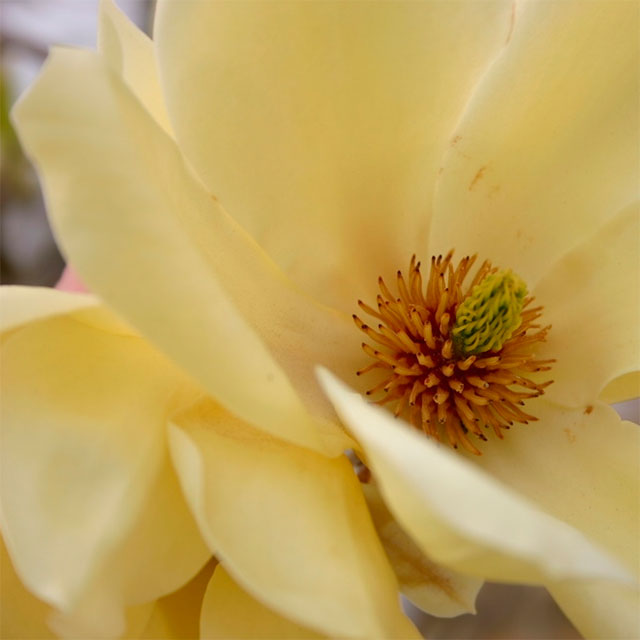
- Blossom Details: Features large, elegant, goblet-shaped, lemon-yellow flowers. The colour typically fades slightly as the bloom matures. Flowers appear profusely in Mid-Spring (April-May), often before the leaves.
- Mature Height & Spread: A moderate-sized feature tree, typically reaching 7m in height and 4m in spread.
- Soil Type & Drainage: Requires rich, moist, slightly acidic soil. Must be well-drained. Avoid planting in compacted clay; if you have heavy soil, see our guide on trees that thrive in clay for suitable alternatives and planting tips.
- Aspect/Light: Best in Full Sun or Part Shade. Protect from early morning sun in spring to prevent frost damage to the buds.
- Hardiness: RHS H6 (Fully hardy across the UK).
Magnolia x brooklynensis ‘Yellow Bird’ (Yellow Bird Magnolia)
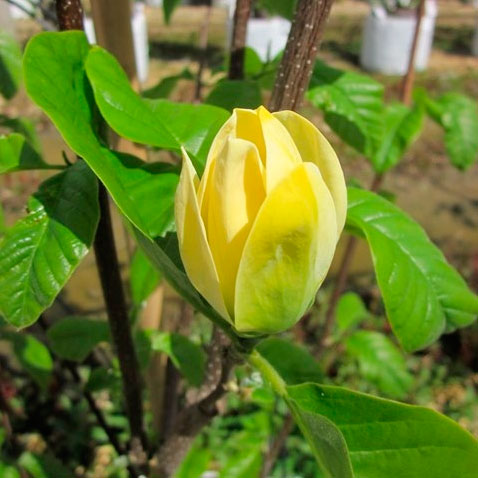
- Blossom Details: Produces distinctive, deep canary-yellow flowers. The colour holds better in the sun than ‘Elizabeth’, making it one of the most vibrant yellow Magnolias. Flowers in Mid-Spring (April-May).
- Mature Height & Spread: Slightly smaller and more columnar than ‘Elizabeth’, reaching approximately 7m in height and 3m in spread.
- Soil Type & Drainage: Requires rich, moist, slightly acidic soil. Must be well-drained. Avoid planting in compacted clay.
- Aspect/Light: Full Sun is preferred to maximise the intensity of the yellow colouration.
- Hardiness: RHS H6 (Fully hardy across the UK).
Koelreuteria paniculata (Golden Rain Tree / Pride of India)
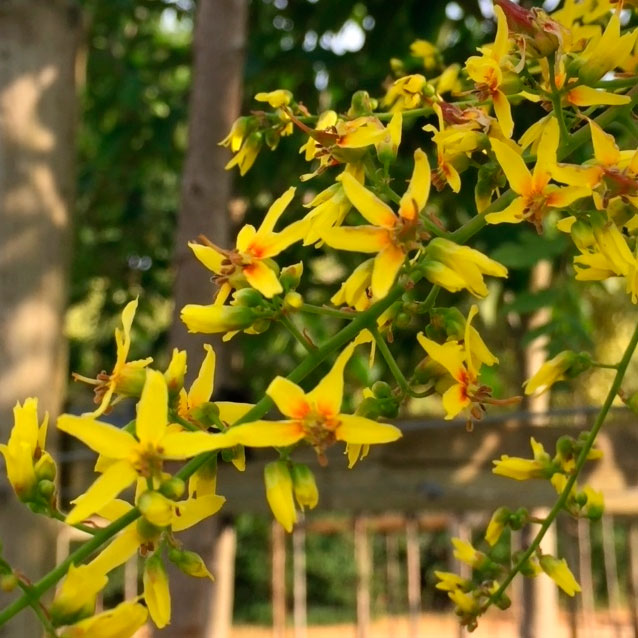
- Blossom Details: Produces large, upright panicles of bright yellow flowers in Early to Mid-Summer (June-July). Although individual flowers are small, they are borne in such profusion that the overall display is bold, luminous, and highly ornamental, creating a striking focal point in the landscape.
- Mature Height & Spread: A medium-sized ornamental tree, typically reaching 7-12m in height with a broadly rounded crown of similar spread. Well suited to larger gardens, arboreta, and parkland settings.
- Soil Type & Drainage: Thrives best in free-draining soils. Adaptable to a range of soil types, including poor or dry soils once established, but dislikes waterlogged conditions.
- Aspect/Light: Requires Full Sun to achieve the best flowering display and autumn colour.
- Hardiness: RHS H6 (Fully hardy across the UK).
Laburnum x watereri ‘Vossii’ (Golden Chain Tree)
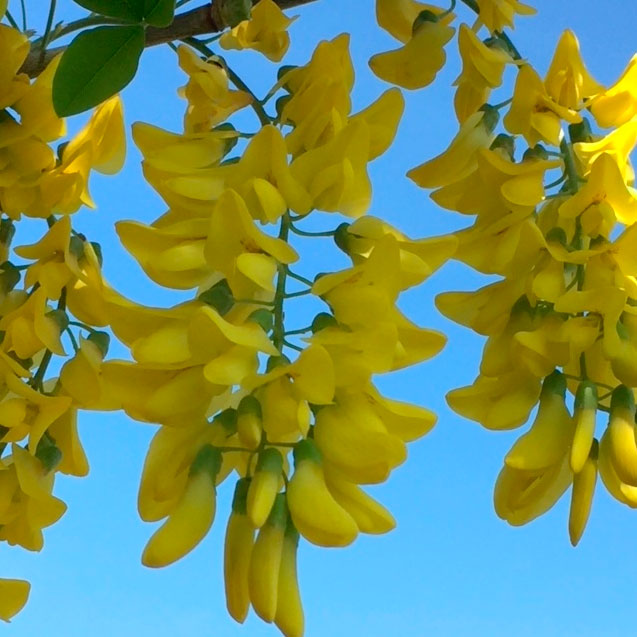
- Blossom Details: Perhaps the most spectacular of all yellow-flowering trees, it produces exceptionally long, drooping clusters (racemes) of pea-like, bright yellow flowers. These fragrant “golden chains” can reach up to 50cm in length and cover the tree in a dense canopy of colour in Late Spring (May-June)
- Mature Height & Spread: A small to medium-sized tree, typically reaching 7m in height and 5m in spread. Its size makes it highly versatile for most garden scales.
- Soil Type & Drainage: Extremely adaptable. It thrives in most soils, including chalk and clay, provided they are well-drained.
- Aspect/Light: Performs best in Full Sun, which ensures the most prolific flowering display.
- Hardiness: RHS H6 (Fully hardy across the UK).
By considering these four essential requirements – size, soil, aspect, and hardiness – alongside the promise of spectacular yellow flowers, you are equipped to select a tree that will provide many years of stunning ornamental value.