

Photo gallery
-
Zoom image 1
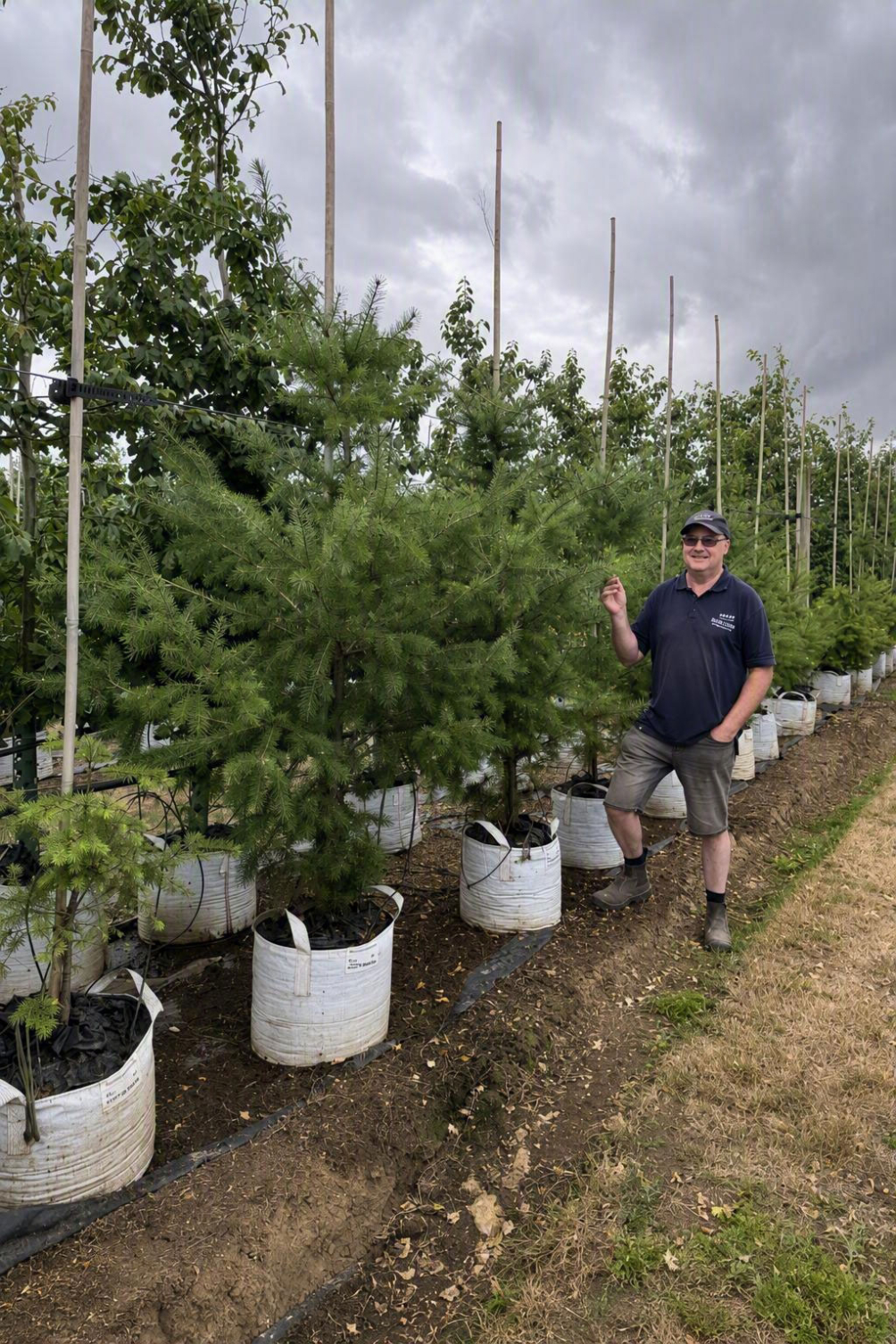
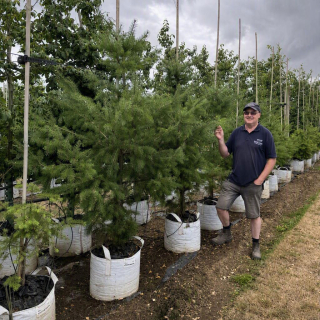
Pseudotsuga menziesii Batch Photo 2026 -
Zoom image 2
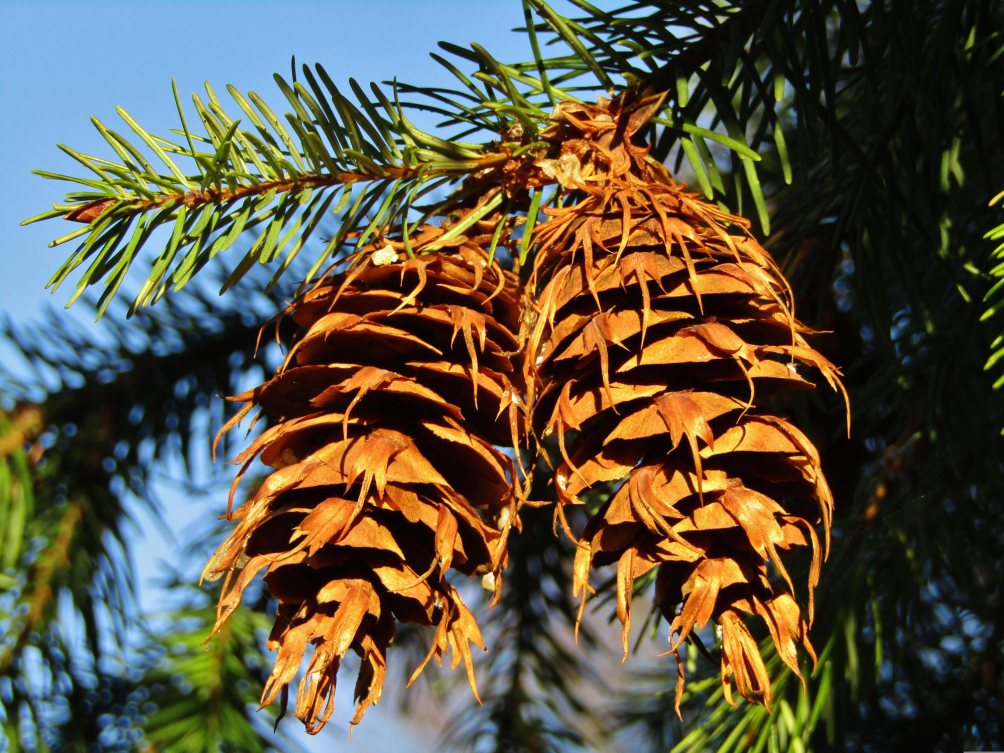
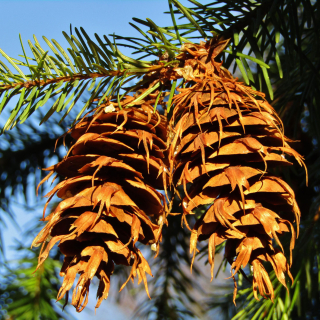
Douglas Fir Cones -
Zoom image 3
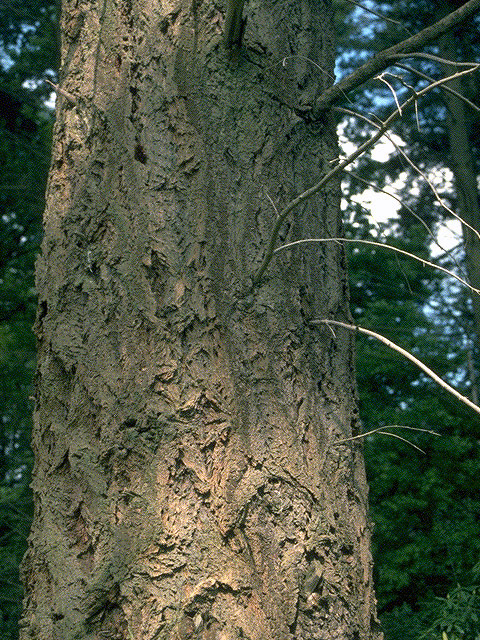
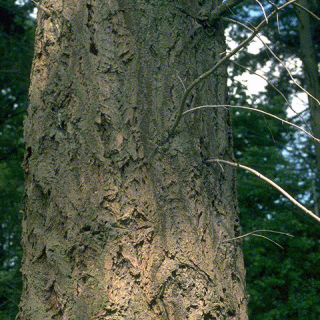
Douglas Fir Mature Bark -
Zoom image 4
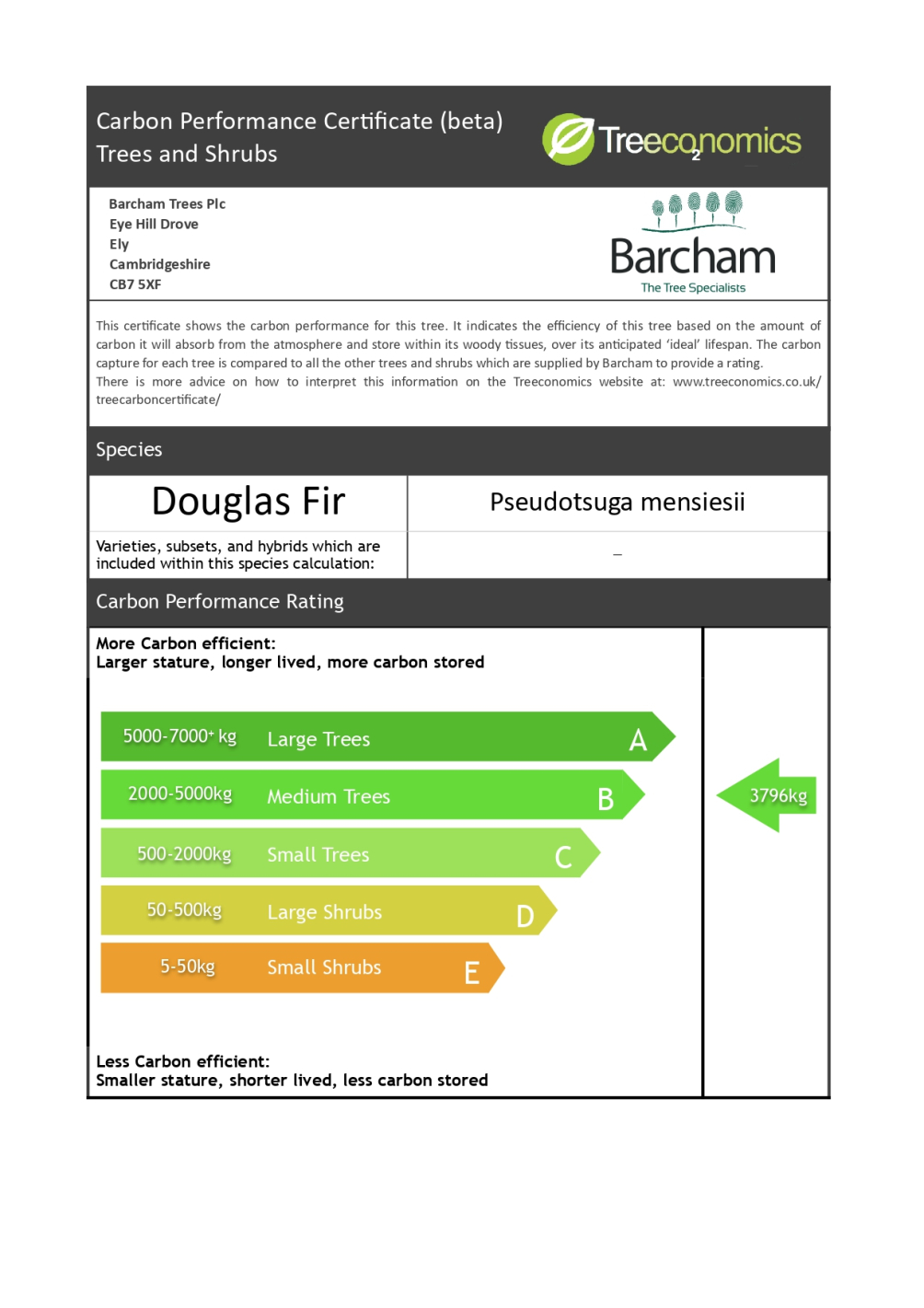
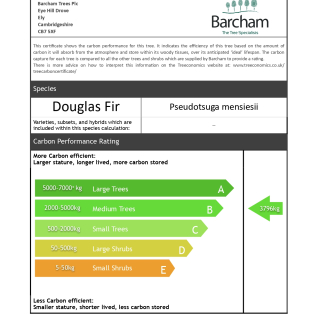
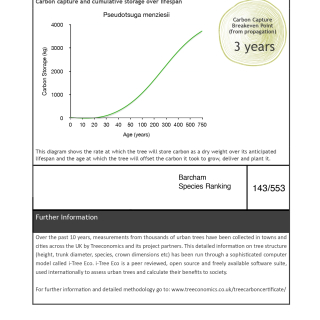
Carbon Rating -
Zoom image 5
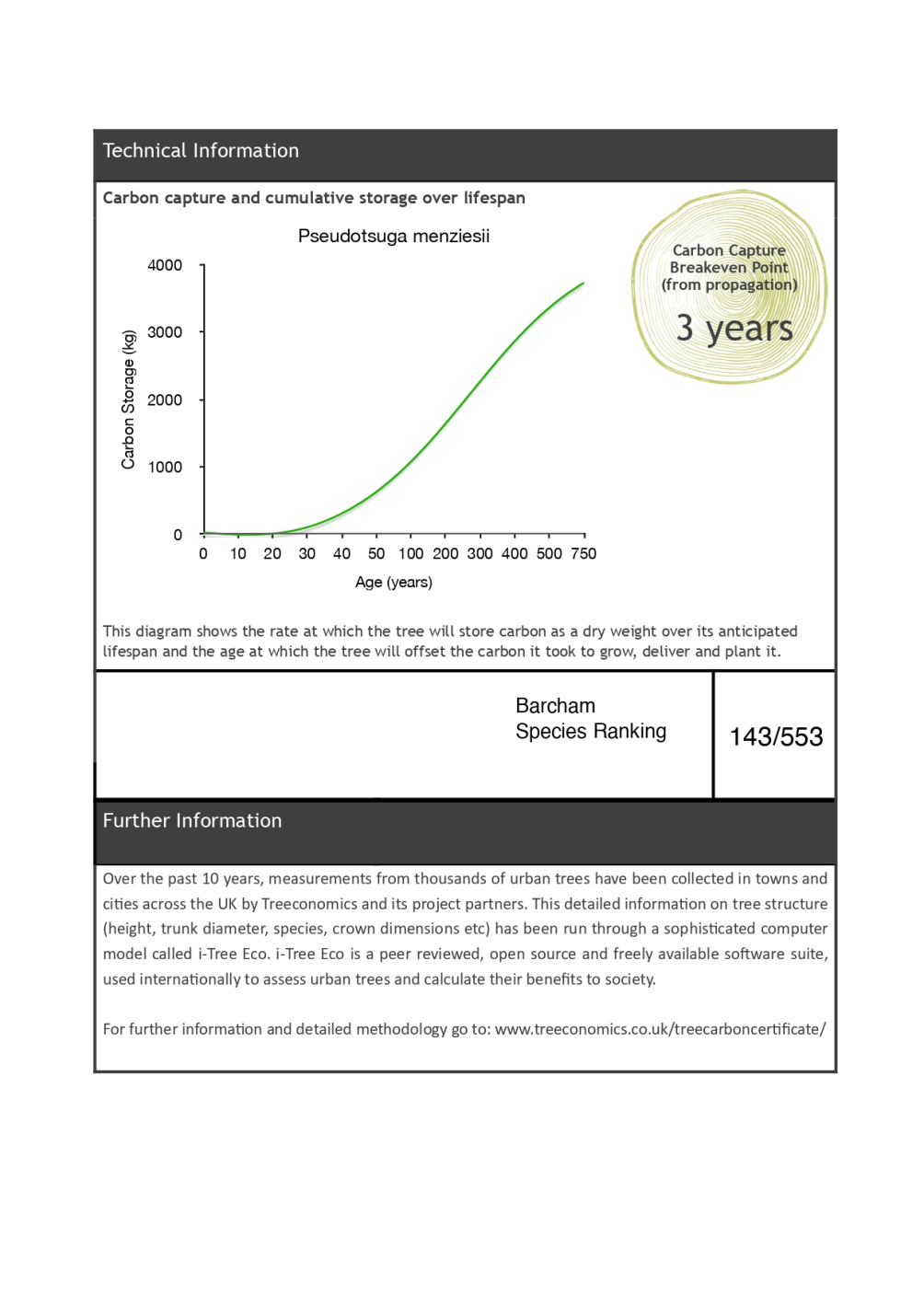
Carbon Rating
Douglas Fir
Pseudotsuga menziesiiAbout this product
Native to North America and Mexico, this fast-growing, large evergreen tree was first introduced to the UK by botanist David Douglas in 1827, hence its common name, Douglas Fir. Its botanical name, however, honours Archibald Menzies, who first documented the species in 1791.
The tallest specimens in North America can exceed 100m in height, with trunks more than 2m in diameter. Although such dimensions occur under optimum conditions, Douglas Fir is still a very large, fast-growing tree and is best suited to parkland and other spacious settings. At maturity, it develops a loosely pyramidal canopy.
Its linear, dark green leaves are arranged in two ranks along the shoots. Distinctive cones, reaching around 10cm in length, hang down from the branches, with pointed bracts protruding beneath each scale to give them a characteristically spiky appearance.
As the tree matures, its bark becomes thick and rugged, adding further character. Douglas Fir prefers a position in full sun and performs well in well-drained, non-chalky soils. It is suitable for both exposed and sheltered positions, is rated H6 for hardiness and develops a spread of more than 8m.
Mature height: 20m+
Specifications
- Common names
- Douglas Fir
- Height of tree
- 20m+
- Soil type
- Will tolerate most soil types
- Shape
- Pyramidal
- Foliage Colour
- Green
- Location
- Parkland
- Genus
- Pseudotsuga