

How far away can trees safely be planted from a house?
The question of how far away a tree should be planted from a house is critical for protecting your property. Tree roots can travel surprisingly far, and their presence near foundations, especially in clay soil, can cause severe structural issues like subsidence by drawing away essential moisture. Furthermore, roots are often blamed for damaging underground drains and services. In this article, we'll tell you the safe planting distance and show you two expert techniques for planting attractive trees closer to your home without the risk.
In our experience, subsidence usually occurs when high-water-demand trees are planted near houses built on shrinkable clay soils. The clay soil is the underlying cause of movement, but the tree’s large root system is what draws away essential moisture and causes the clay to shrink. Because the tree is the most obvious factor, it often becomes the immediate target for removal by the insurance industry.
If you are looking to plant in clay soil safely, see our guide on the best trees for clay soils, which covers how to select and manage trees without compromising your garden’s health.
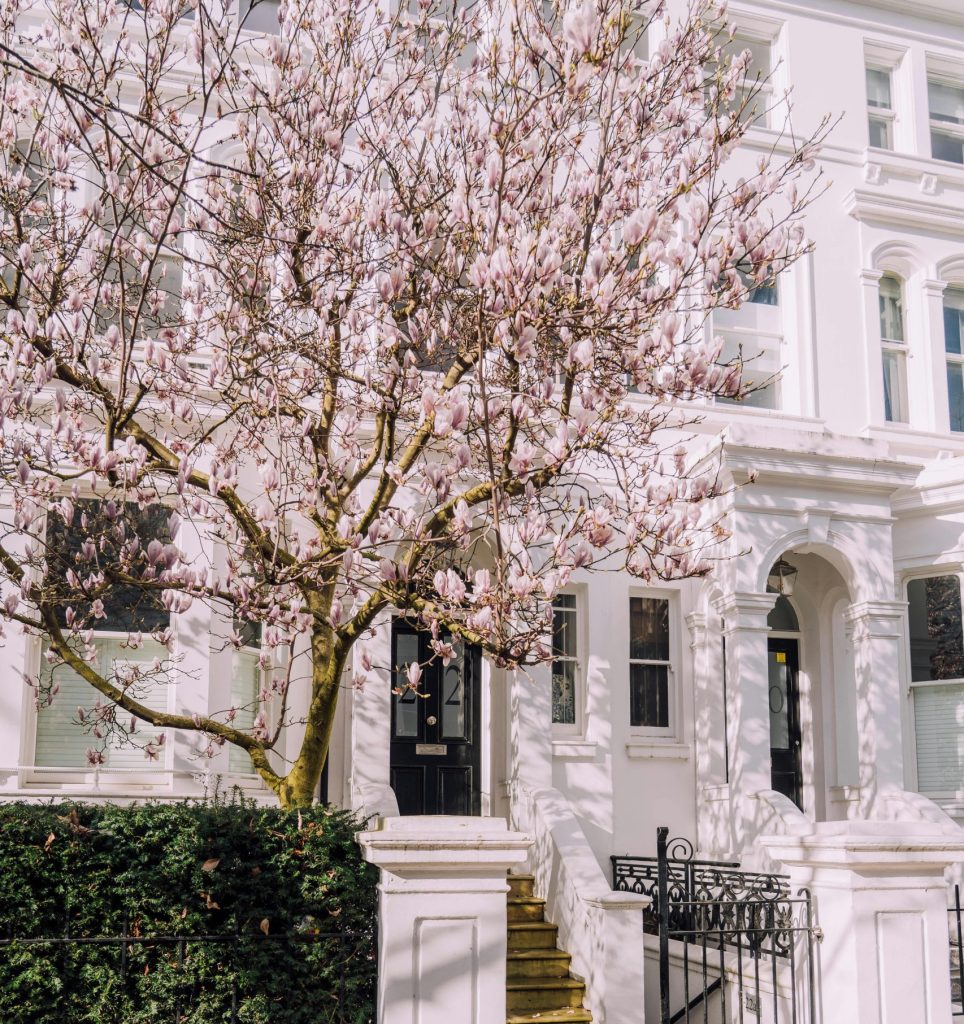
With that in mind, avoid planting a tree that has the capacity to grow beyond 6 metres (20 feet) within 10 metres (33 feet) of a building.
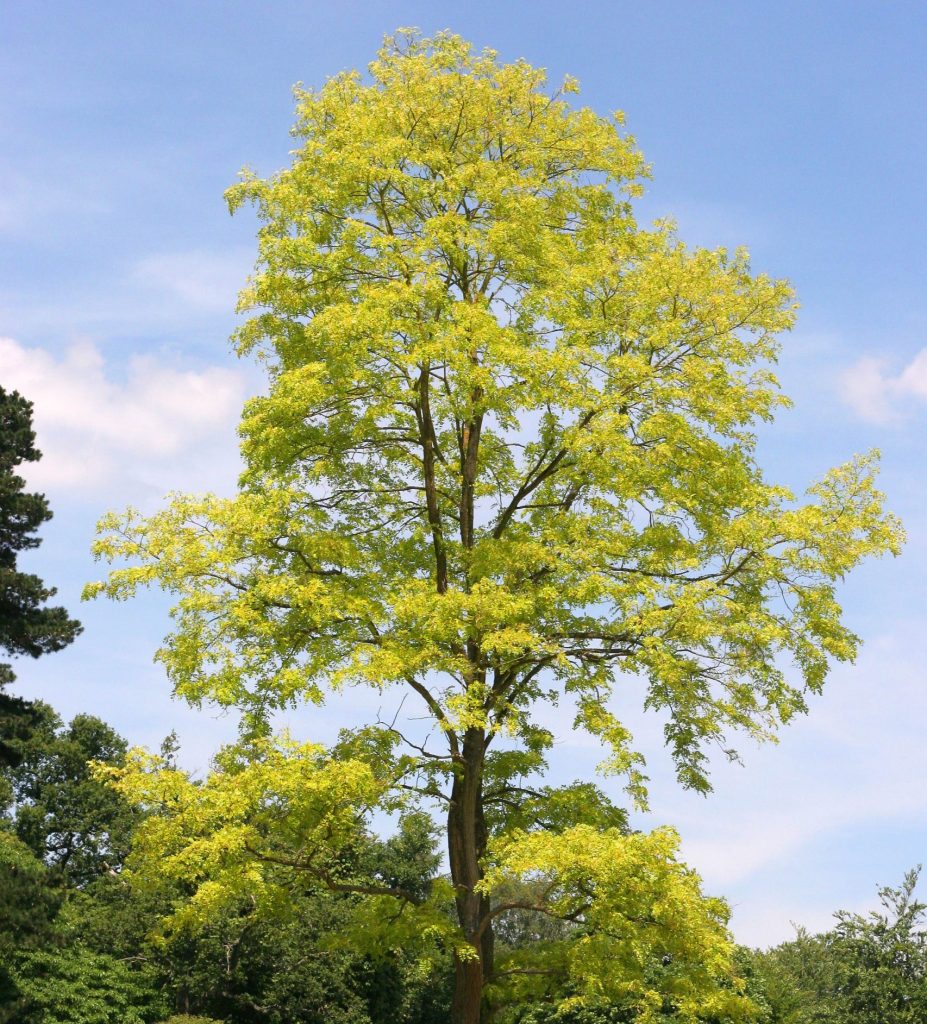
This caution is especially important for certain large trees like Robinia pseudoacacia and Populus alba. They are known to send up adventitious sucker growth from their extended root systems and have even been known to thrust up through floorboards!
However, you can box clever on this! Sometimes it is nice to have trees growing close to buildings to soften the hard landscape, as well as giving the opportunity for evergreen screening and privacy. There are two ways of achieving this without future ramifications.
1. Pruning: Controlling the Tree’s Size
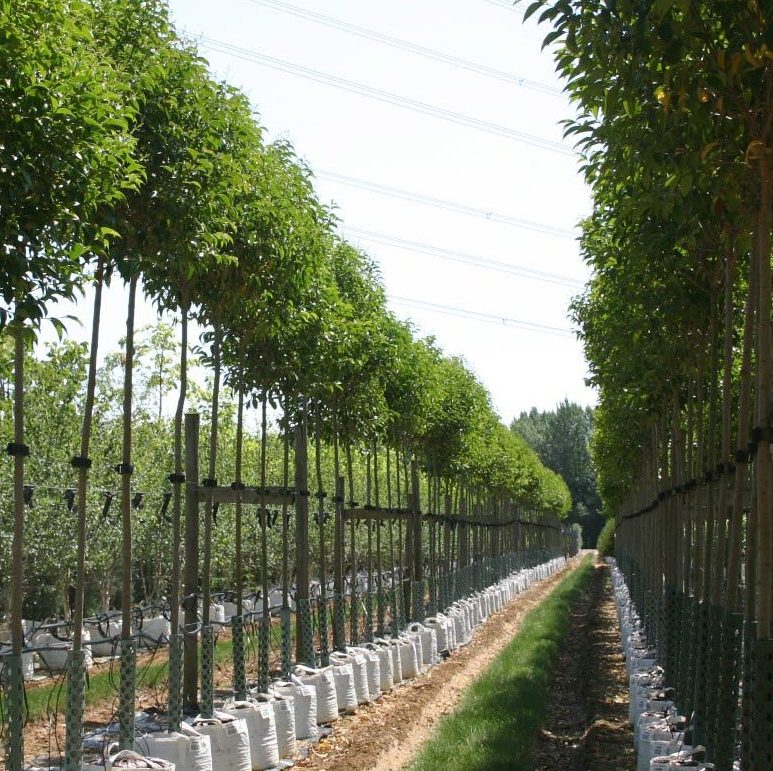
The first way is to keep a tree tamed. Tilia euchlora (Aphid Resistant Lime) has the capacity to grow to 18 metres (60 feet) tall by the same across. Generally speaking, a root system matches the tree’s canopy to anchor it and provide the water and nutrients to support its crown.
You can keep a mature tree such as Tilia euchlora to a mere 3 to 4.5 metres (ten to fifteen feet) high by routinely pruning back to the same point every winter, so reducing its need to produce a problematic root system to sustain it. This is sometimes referred to as pollarding. Alternatively, you can pleach or espalier the crown back each year to a one-dimensional frame for screening or formal aesthetics, which gives you the same effect.
The drawback is that your tamed tree will want to revert to its normal size whenever it gets the opportunity to do so! Tree taming requires routine yearly maintenance every winter.
2. Selection: Choosing Small Trees
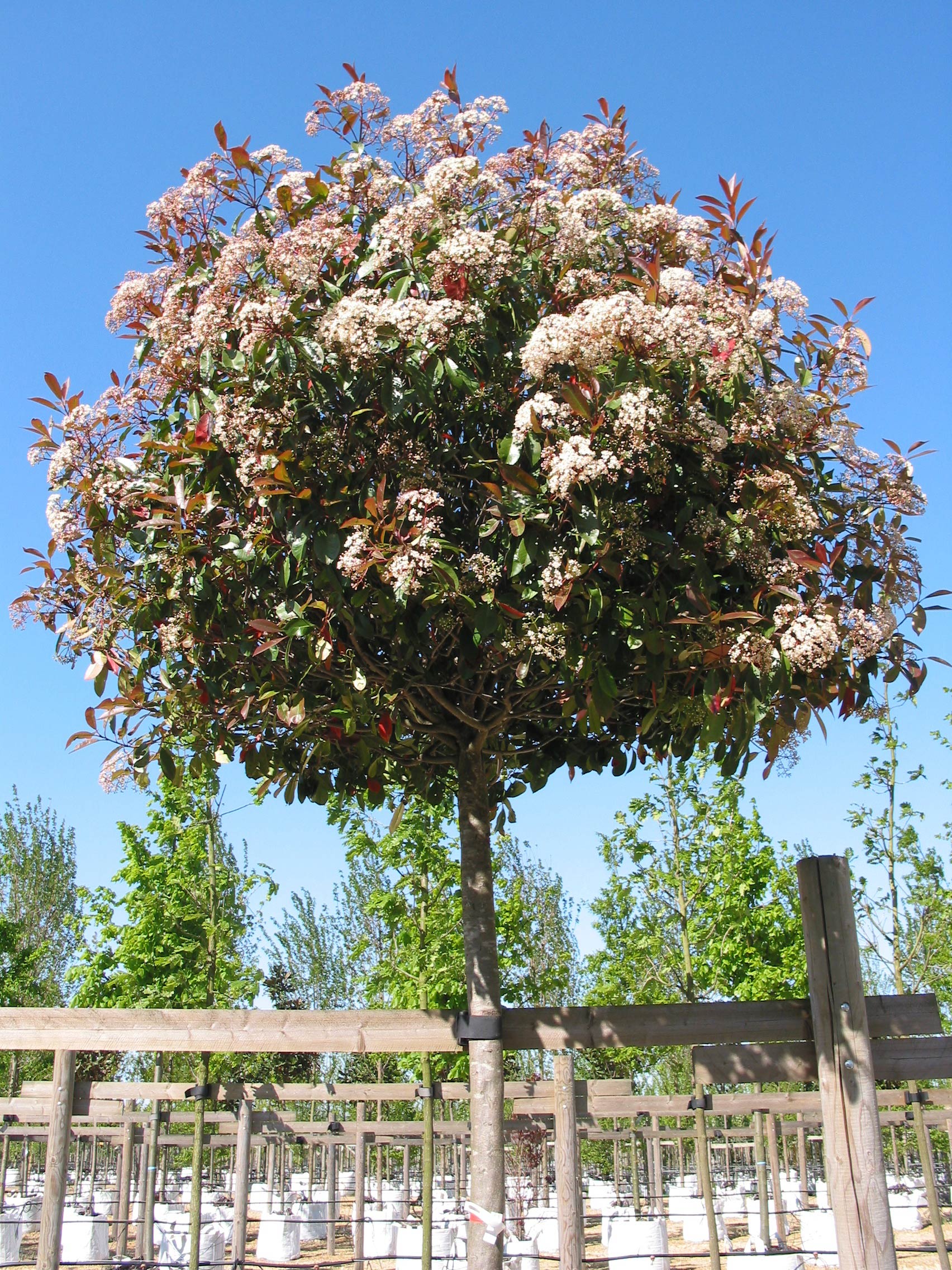
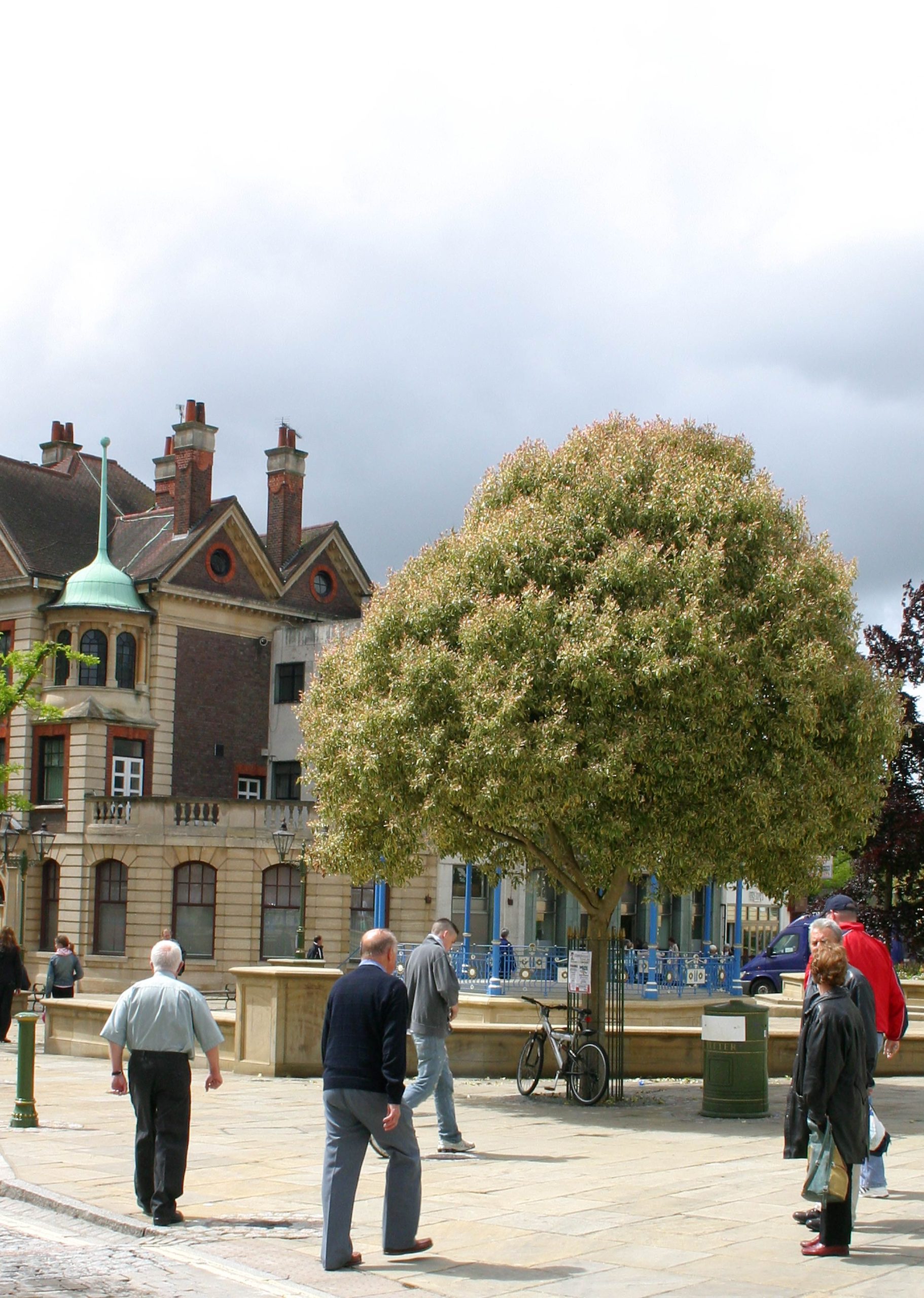
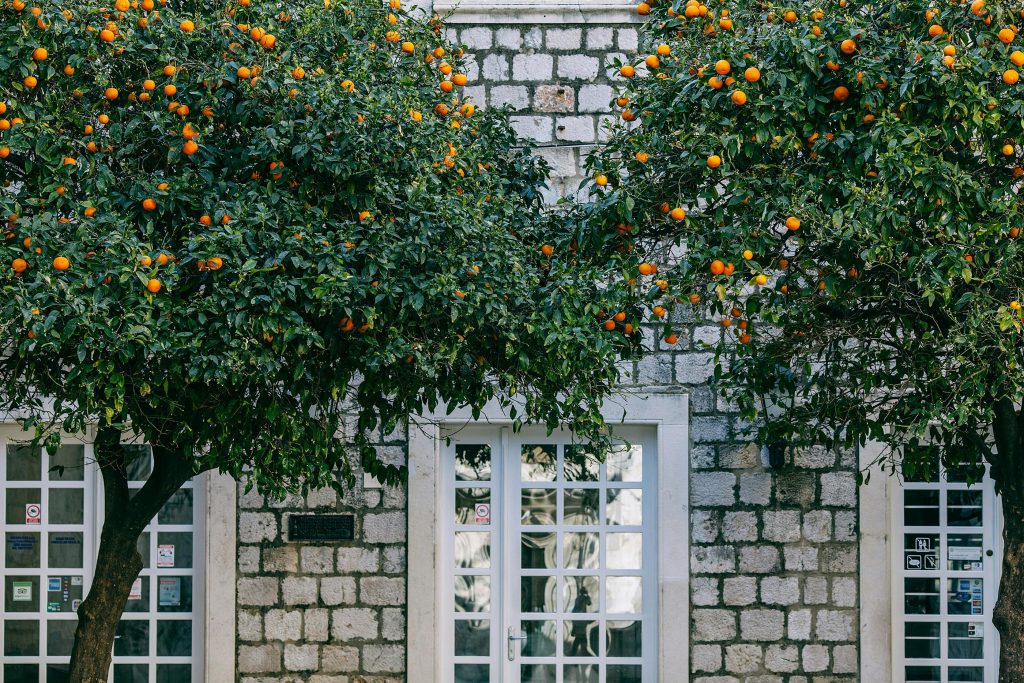
The second way to safely plant trees close to houses and buildings is to choose trees with the capacity to grow no more than 6 metres (20 feet) at maturity. You would be best considering a species which is half shrub and half tree, such as:
These small garden trees are excellent for screening as they are also evergreen. In general, the best practice is, the more distance you can allow when planting, the better, to be safe. We recommend pruning these types of trees to keep them full and dense, particularly if you are using them for screening.
How do I know I’ve chosen the right tree for my location?
Choosing the right tree for its location is paramount and that’s where we come in! We have a wealth of experience to help you make the right choice, just email us a photo to info@barchamtrees.co.uk
Get some advice